
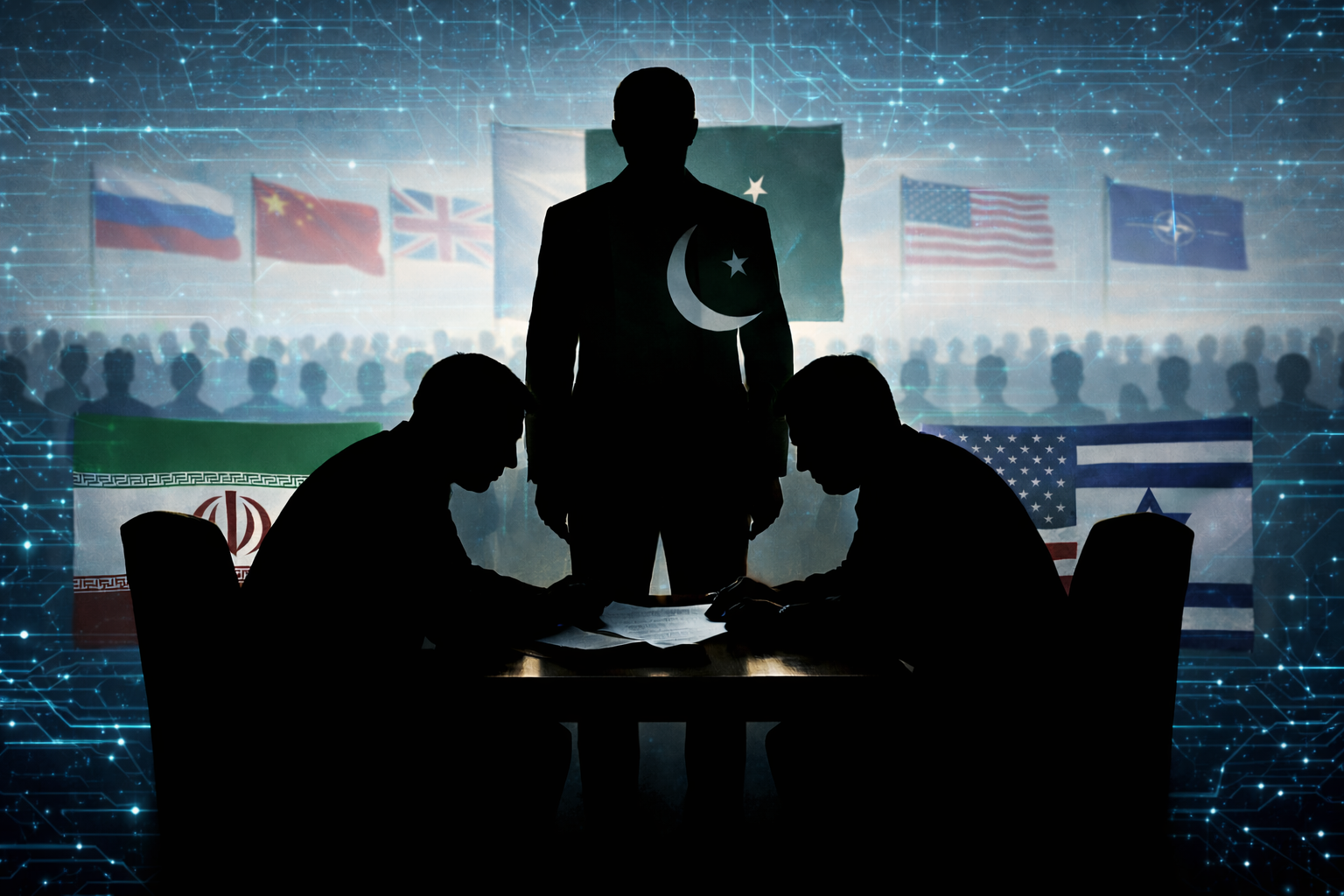
透明な密室
米・イラン停戦交渉、パキスタン仲介は「傍受」されているのか
―サイバーリスクの多層構造と日本への示唆
The Transparent Secret Room
―— Pakistan’s Mediation, Cyber Interception Risk, and Its Implications for Japan
2026年4月10日
発行元: 一般財団法人 日本危機管理研究所
*英訳版は日本語版の後に掲載しています。/ The English translation follows the Japanese text below.
※本稿における「停戦合意」「戦況」に関する記述は、2026年4月8〜10日時点の各報道機関(Axios、Al Jazeera、Bloomberg、France 24、PBS NewsHour、NBC News、AFP等)の報道に基づく。(本稿執筆:4月10日)停戦の詳細・適用範囲については各当事者間で解釈が分かれており、今後の進展によって状況が変化する可能性がある。
【本稿の主題】本稿は2026年の米・イラン停戦交渉を分析事例として用いるが、その主題はこの停戦の帰趨ではなく、現代の外交交渉が構造的に抱えるサイバーリスクの普遍的問題にある。停戦の進展・崩壊にかかわらず、本稿の論旨は損なわれない。
外交交渉の極秘メッセージは、送信者と受信者の二者間だけで完結しない。仲介国のインフラ、情報機関の二重構造、多極的な外交ネットワーク——これらが複合することで、メッセージは「見えない傍受者」に構造的に到達しうる。その構造を本稿で解剖する。
■ 本稿のねらい
Axiosほか複数の報道機関によると、2026年4月8日、パキスタンの仲介により米国とイランが2週間の停戦に合意した。シャバズ・シャリフ首相とアシム・ムニール陸軍参謀長(野戦元帥)が数週間にわたって展開したバックチャンネル外交(表に出ない秘密の外交ルート)は、世界的な原油危機と核戦争の瀬戸際からの回避という歴史的成果をもたらしたと報じられている。
ただし、この停戦の「適用範囲」については各当事者の主張が一致していない。パキスタンは「レバノンを含む全域での即時停戦」を宣言したが、イスラエルはただちに「レバノンには適用されない」と反論。実際に同日、イスラエルはベイルートおよびレバノン全土で大規模空爆を実施し、少なくとも254名が死亡、1,165名が負傷したと伝えられている(Al Jazeera、2026年4月8日)。
本稿の目的は三層構造をなしている。第一に、仲介国パキスタンが抱えるサイバーセキュリティ上の構造的脆弱性を明示すること。第二に、傍受・改ざんの「見えない受取人たち」が誰であり、なぜ犯人特定が困難なのかを構造的に分析すること。第三に、この事例から日本の外交・安全保障政策への発展的な示唆を見出すことである。
■ キーワード
バックチャンネル外交 / Backchannel Diplomacy / サイバーリスク / Cyber Risk / 情報傍受 / Signals Intelligence (SIGINT) / ISI(パキスタン統合情報局) / MİT(トルコ国家情報機関) / CPEC(中パ経済回廊) / APT(持続的標的型攻撃) / スリーパー型マルウェア / Sleeper Malware / サプライチェーン攻撃 / Supply Chain Attack / アトリビューション / Attribution / ゼロトラスト外交 / Zero-Trust Diplomacy / 経済安全保障推進法 / OSINT
■ エグゼクティブサマリー
- パキスタンは米・イラン双方と外交関係を維持する数少ない国として今回の停戦仲介で歴史的役割を果たしたが、停戦の適用範囲(特にレバノン)については当事者間で解釈が割れており、停戦の「完全性」自体がすでに問われている。
- 今回の仲介において、極秘メッセージが構造的に到達しうる層は三層存在する。①交渉当事者(米・イラン・イスラエル)、②仲介補助国(トルコ・サウジ・エジプト)、③影の受益者(中国・ロシア等)——極秘メッセージはこの三層すべてに到達しうる構造にあった。
- パキスタンの通信インフラはCPECの一環としてファーウェイが構築したネットワークが根幹をなし、構造的な第三者傍受リスクが存在する。米国企業BESによる連邦訴訟(2021年)では、ファーウェイがパキスタンの国家安全保障上重要なデータを中国のサーバーに複製したと主張されている。なお、これは構造的リスクの存在を示すものであり、今回の交渉通信がこのインフラを実際に経由・傍受されたと確認されているわけではない。
- さらに深刻なのは「平時潜伏リスク」である。CPECインフラは2015年頃から構築されており、今回の交渉が始まる以前から通信パターンの監視・蓄積が可能な状態が続いていた可能性がある。
- 傍受・改ざんの「犯人特定(アトリビューション)」は技術的・政治的に極めて困難であり、「証明」よりも「傍受を前提とした通信設計」——ゼロトラスト外交——への転換が現実的な対応策となる。
- 日本にとって本事例は「他国の話」ではない。仲介国選定の制度的評価基準、企業・政府のサプライチェーンリスク管理、自国が仲介者となる際の技術的条件、「情報汚染」への組織的対応という四つの政策課題を提起する。
1.仲介外交の経緯と報道概要——6週間の瀬戸際とパキスタンの役割
Bloomberg、France 24、Al Jazeeraの各報道によると、2026年2月28日、米国とイスラエルの協調攻撃によってイランへの爆撃が開始された。以後約6週間、中東は核戦争と原油供給危機(ホルムズ海峡封鎖による世界の石油・ガス輸送の約2割の遮断)の瀬戸際に立たされたと報じられた。
Al Jazeeraの詳報によると、パキスタンが仲介に踏み込めた背景には、
①イラン・米国双方と外交関係を持つ稀有な立場、
②ムニール参謀長とトランプ大統領の個人的信頼関係、
③サウジアラビア・トルコ・エジプトとの多国間調整の三点がある。
3月23日にパキスタンが正式に仲介を申し出、4月8日にトランプ大統領が停戦を宣言した。
注目すべきは、中国もパキスタンとともに交渉に直接関与し「5ポイント・イニシアチブ」を共同提示した点である(Al Jazeera、2026年4月8日;Axios、2026年3月31日;中国外務省公式声明、2026年3月31日)。また停戦後もイスラエルはレバノンへの空爆を継続し、イランは停戦枠組み違反を主張してホルムズ海峡を再閉鎖するなど、停戦の実効性は流動的な状況にある(PBS NewsHour、OPB、2026年4月8日)。
2.仲介チャンネルの脆弱性——構造に内在するサイバーリスク
仲介者は中立の伝達者ではない。その通信経路は構造的に複数の第三者に開かれており、問題は単に「誰かが内容を読むかどうか」という次元にとどまらない。メッセージが生成される以前から監視体制が敷かれており、交渉の開始を知る前に構造的な傍受環境がすでに整っている可能性がある。
リスク① 中国製インフラによる構造的傍受
パキスタンの通信インフラの根幹を成すのはCPECの一環としてファーウェイが構築したネットワークである。セキュリティ研究者らはこのインフラにバックドア(不正アクセス用の隠し入口)が設けられている可能性を繰り返し指摘している。米・イラン間のメッセージがこのインフラを経由した場合、中国当局が内容を入手できる立場にある。さらに今回、中国は外交的にも交渉に直接関与しており、インフラ的存在感と外交的関与が重なる構造は独立した第三者的傍受リスクとして特に注視すべきである。
リスク② ISIの二重構造
パキスタンの情報機関ISIは、対テロ情報共有においてCIAと協力しながら、同時に中国のサイバー支援を受けるという二重構造にある。スノーデン文書はNSAがパキスタン政府・軍を監視対象としていることを示唆しており、「協力しながら監視される」という構造が仲介チャンネルの信頼性を根本的に揺るがしている。
リスク③ トルコMİT経由の情報漏洩経路
トルコはパキスタン・サウジ・エジプトと外相会議を重ね、仲介の補助役を担った。MİTとISIの情報共有関係を経由した第三国(ロシア、湾岸諸国等)への情報流出経路が形成されうる。ギュレン運動関連でMİTはISIに協力要請を行った経緯があり、両機関の関係は利害に基づく実用主義的なものである。
リスク④ イスラマバード会談会場のセキュリティ
4月10日のイスラマバード会談は開催が確定し、代表団到着・警備強化など実施段階に入っている(2026年4月10日時点)。交渉結果は本稿執筆時点で未確定であり、今後の進展に注目が必要である。会場の通信傍受対策(テクニカル・サーベイランス・カウンターメジャーズ)が米・イランそれぞれの基準を満たすかどうかは不明であり、開催地のサイバーセキュリティ水準が交渉内容の機密保全に直結する。なおイランは直前まで停戦枠組み違反を理由に会談離脱の可能性を示唆していたが(Axios、2026年4月8日)、最終的に会談は実施段階に移行した。
3.多極接続が生む「情報汚染」リスク——対立勢力すべてと繋がることの代償
パキスタンは米国・中国・サウジアラビア・イランという対立勢力すべてと外交・経済関係を維持している。これは仲介外交の強みであると同時に、情報の選択的漏洩や意図的歪曲が発生しうる構造的脆弱性でもある。APT36の存在が示すように、ISIは国家目標のために非公式のサイバー代理勢力を活用している実績がある。
今回の停戦をめぐる各当事者の異なるナラティブ——「全域での停戦」対「レバノンは対象外」、「イランの勝利」対「米国の軍事目標達成」——は、仲介プロセスにおけるメッセージの「翻訳」あるいは「歪曲」がすでに発生していた可能性を示唆している。
3-1.リアルタイム検証——停戦成立後24時間が示したもの
本稿の分析枠組みは、停戦成立直後の展開によって三つの形で現実に裏付けられた。
【検証①】10項目提案「3バージョン問題」
ヴァンス副大統領はAxiosの取材に対し、今回の交渉で「イランの10項目提案」が実際には3つの異なるバージョンで流通していたことを認めた(Axios、2026年4月8日)。最初のバージョンは「おそらくChatGPTが書いた」として廃棄されたという。どのバージョンがどの経路でどの当事者に届いたかによって、各当事者が「合意した」と認識している内容が根本的に異なっていた可能性がある。
【検証②】レバノン適用範囲の齟齬
シャリフ首相が「レバノン含む全域停戦」とSNSに投稿した直後、ネタニヤフ首相が否定し、ヴァンス副大統領が「誤解だった」と述べた。フィナンシャル・タイムズは、パキスタンは「中立の仲介者」ではなくホワイトハウスに押される形で動いた「便利な経路」であったと報じた(ANI / Financial Times、2026年4月9日。※ANIはインド通信社経由の転載報道。FT原文の直接確認を推奨)。さらにシャリフ首相がSNS投稿に「draft –(下書き)」ラベルをつけたまま誤送信したことも報じられており、情報管理の脆弱性が象徴的な形で露呈した。
【検証③】ホルムズ海峡の再閉鎖
停戦合意から数時間でイランがホルムズ海峡を再閉鎖した(PBS NewsHour、OPB、2026年4月8日)。仲介チャンネルにおけるメッセージの不完全伝達が、現実の軍事・経済行動に直結した事例である。
4.『見えない傍受者』たち——誰が読み、誰が歪めたか
今回の仲介プロセスにおいて「合意文書の傍受・改ざん・不完全伝達」を行う動機・能力・機会を持つ国家主体として、少なくとも四つの行為者が浮かび上がる。重要なのは、「積極的な改ざん」だけでなく「選択的な不完全伝達」や「意図的な曖昧化」も同等の効果をもたらし、かつ証明が極めて困難であるという点である。
【中国】 動機★★★ 能力★★★ 機会★★★(三要素が最も揃った行為者)
CPECインフラを通じた技術的アクセスが構造的に保証されており、今回は外交的にも交渉に直接関与した。米・イランが直接和解することは中東における中国独自の仲介影響力を削ぐリスクをはらむ。合意内容を「意図的に曖昧にする」方向の介入は中国の地政学的利益と合致する。
【イスラエル】 動機★★★ 能力★★★ 機会★★
停戦後もレバノン攻撃を継続し「停戦はレバノンに適用されない」という解釈を貫いた結果は、イスラエルにとって最も都合の良い形で「解釈の齟齬」が生じたことを示している。NSAとの深い技術協力関係から高度なSIGINT能力を持ち、停戦直前にネタニヤフがトランプに電話してレバノン除外を確認させたという報道(Axios)は、「交渉への直接介入」という形で合意内容に影響を与えた可能性を示す。
【ロシア】 動機★★ 能力★★★ 機会★
技術能力は最高水準にあるが、今回の仲介チャンネルへの直接アクセスは限定的である。ただしMİT経由の間接的な傍受の可能性は排除できない。米・イランの和解による中東安定化はロシアの地政学的利益に反し、混乱の継続はむしろ歓迎される状況にある。
【ISI内部の自律的行動】 動機★★ 能力★★ 機会★★★
ISIはパキスタン政府の意図とは独立して動く組織的慣行を持っている。シャリフ首相による「draft –」誤送信は情報管理の脆弱性を象徴しており、軍(ムニール参謀長)と政府(シャリフ首相)の間でさえ伝達内容が統一されていなかった可能性は、組織内部の情報分断リスクとして重要である。
5.平時からの潜伏——「有事の傍受」を超えた構造的脅威
本稿のここまでの分析は「交渉が行われている最中の傍受リスク」に焦点を当ててきた。しかし実際の脅威はより深い次元に存在する。「手紙が書かれる前から、部屋に誰かが潜んでいる」——これが平時潜伏リスクの本質である。
5-1.ファーウェイ・パキスタン事例の具体的根拠
平時潜伏リスクは抽象的な懸念ではない。2021年、米国企業BESがカリフォルニア州連邦裁判所に提起した訴訟(Wall Street Journal、The Register報道)において、以下の具体的疑惑が記録されている。
2016年、ファーウェイはパキスタン・ラホール市の治安近代化プロジェクト(1億5000万ドル規模)において、国家IDカード・税務・移民・パスポート等の政府横断データを統合する「データ交換システム(DES)」を構築した。BESの訴状によると、ファーウェイはこのDESの複製を中国・蘇州市の自社施設内に構築し、パキスタンの国家安全保障上重要なデータへの常時アクセスを確立したとされている。
ファーウェイは「バックドアを設置した証拠はない」として否定しており訴訟は継続中である。ただしこの事例は、平時のインフラ構築段階からデータアクセス経路が設計される可能性を示す具体的記録として重要である。
5-2.スリーパー型マルウェアと「2週間の沈黙」
平時潜伏リスクの第二の形態はスリーパー型マルウェアである。これは特定のトリガーが発動するまで一切活動しない設計のマルウェアで、通常のセキュリティスキャンでは検出できない。
2020年に発覚したSolarWinds事件はその典型例である。ロシアSVRに帰属するAPT29は、2019年9月に侵入に成功し正規のソフトウェアアップデートにSUNBURSTというバックドアを仕込んだ(CISA勧告AA20-352A、2020年)。このマルウェアは感染後約2週間にわたって完全に沈黙し、検出を回避しながら18,000以上の組織に感染した。米国土安全保障省・財務省・商務省・国防総省等の連邦機関が被害を受けた。
CPECインフラが2015年頃から構築されてきたことを考えると、「今回の交渉で傍受された」のではなく、「交渉が始まることを、始まる前から知っていた」という状況が技術的に成立しうる。
5-3.メタデータの恐怖——内容を読まなくても「すべて」がわかる
平時潜伏リスクの第三の形態は「メタデータ」の収集である。メタデータとは「誰がいつ誰と話したか」という通信の属性情報であり、暗号化されていても収集可能である。
ムニール参謀長とワシントンの通話頻度が急増した日時、パキスタン外務省とテヘランの通信量が倍増したタイミング——これらのメタデータを分析するだけで、交渉の山場・行き詰まり・妥結の兆候を高精度で推定できる。暗号化によって内容は守られても、メタデータが漏洩すれば交渉の全体像は筒抜けになる。
6.犯人は特定できるか——アトリビューションの四重の壁
傍受・改ざんが発生したとして、その犯人を技術的に特定することは可能か。結論から言えば、「技術的には可能な部分もあるが、現実には四重の壁が立ちはだかる」。
壁①:インフラそのものが証拠隠滅装置になりうる
CPECのファーウェイ製インフラを傍受に使った場合、そのログ自体が中国側の管理下にある。「証拠を持っている者が証拠を消せる」という構造的矛盾がある。SolarWinds事件においても、攻撃者は侵入後に痕跡を消去するよう設計されたコードを使用しており、発覚までに約14ヶ月の「滞留期間(Dwell Time)」が存在した(CISA、2020年)。
壁②:「改ざん」と「誤訳」の区別がつかない
今回の「3バージョン問題」や「レバノン適用範囲の齟齬」では、意図的な改ざんと多層的な仲介による自然な情報劣化・誤訳を技術的に区別することが極めて難しい。これが「証明不可能性」の核心である。洗練された国家行為者はこの曖昧さを意図的に利用するのである。
壁③:偽旗作戦(False Flag Operation)
国家レベルのサイバー攻撃において、洗練された行為者はVPNや第三国のサーバーを中継点として使い、痕跡を意図的に別の国のものに偽装する「偽旗作戦」を実行できる。中国・ロシア・イスラエルはいずれもこの能力を持つとされている。
壁④:政治的意思の問題
技術的に証拠が揃っても、「誰が犯人か」を公式に発表する政治的意思があるかどうかは別問題である。今回のケースでは、米国がパキスタンや中国を公式に「傍受犯」と断定すれば、停戦交渉そのものが崩壊する。SolarWinds事件においてさえ、ロシアSVRへの帰属を公式発表したのは発覚から約4ヶ月後であった(CISA、2021年4月)。「証拠があっても言えない」という政治的制約が技術を上回る場面がほとんどである。
6-1.ゼロトラスト外交——パラダイムシフトの必要性
この四重の壁が示す結論は明確である。「犯人を特定して公表する」ではなく、「傍受されたことを前提に通信を設計する」——これがゼロトラスト外交の考え方である。
ゼロトラストとは「内部ネットワークも信頼しない。すべてのアクセスを常時検証する」という設計原則である。これを外交通信に適用すると、「仲介国のインフラも信頼しない。すべての通信はエンド・ツー・エンド暗号化を前提とし、仲介チャンネルを経由しても解読不能な設計にする」という原則となる。
現実的な実装として、①量子暗号通信の外交通信への試験的導入、②通信パートナー認定制度の整備、③メタデータ保護のためのトラフィック難読化技術の採用——の三点が政策的優先課題となる。
7.今後のシナリオ推論——停戦の持続か、崩壊か、中国の台頭か
【本章の位置づけ】下記A〜Dのいずれのシナリオが現実化しても、第2〜6章で示したサイバーリスクの構造——CPECインフラの傍受可能性、平時潜伏リスク、メタデータ収集、アトリビューションの四重の壁——は変わらない。本章はあくまで2026年4月9日時点の時事的推論であり、本稿の主論はその帰趨に依存しない。
シナリオA:「解釈の分裂」を抱えた停戦の形式的維持 (可能性:高)
イスラマバード会談は開催されるが、レバノン・ホルムズ・ウラン濃縮の三点で各当事者が異なる「合意」を持ち帰る。停戦は名目上維持されながら実態は空洞化し、2週間後の延長交渉で再び対立が噴出する。仲介チャンネルの多層性が「解釈の分裂」を構造的に生産し続ける。
シナリオB:イランの交渉離脱と中国の直接仲介への移行 (可能性:中)
レバノン攻撃継続を理由にイランが会談をボイコット。パキスタンは仲介機能を喪失し、中国がCPECインフラを活用した独自の通信チャンネルを構築して直接調停に乗り出す。中国にとっては「仲介成功」による中東への影響力拡大という最大の果実を得る機会となる。
シナリオC:停戦崩壊と原油・LNG価格の再高騰 (可能性:中)
レバノン問題でイランが停戦を離脱し、ホルムズ海峡を再封鎖。日本を含む原油輸入依存国は再び供給危機に直面する。「誰が停戦を崩壊させたか」をめぐる情報戦が勃発し、サイバー起源の情報操作と外交的主張の区別がつかない状態が続く。
シナリオD:「偽停戦」の事後判明 (可能性:低〜中)
いずれかの当事者が受け取った「合意文書」が、傍受・改ざん・不完全伝達によって本来の合意と異なっていたことが事後に判明する。ただし壁④(政治的意思)の問題から、この事実が公式に認定・発表される可能性は低く、「解釈の相違」という外交的表現で処理され続ける可能性が高い。
■ 日本への示唆——四つの政策課題
本事例が日本にとって「他国の話」にとどまらない理由は、日本政府・企業が今後、同様の構造的リスクを持つ国々を経由した外交・経済・通信チャンネルを利用する局面が現実的に想定されるからである。制度設計・実務・外交戦略・横断課題の四つの観点から考察する。
①制度設計:仲介国評価の基準策定
今回の最大の教訓は、仲介国の「外交的中立性」と「サイバーセキュリティ上の中立性」は全く別物だということである。前者は評価されても、後者はほぼ無視されてきた。
外務省・内閣情報調査室が事前に当該国の通信インフラの対中依存度、情報機関の二重構造リスク、会場のテクニカル・サーベイランス水準、平時潜伏リスクの有無を評価する制度的枠組みが必要である。Quad・AUKUSの技術安全保障の共通評価基準への参画を通じ、「仲介国サイバーリスク評価チェックリスト」を同盟国と共同で策定することが現実的な第一歩となる。
②実務:企業・政府のサプライチェーンリスク
2022年に施行された経済安全保障推進法は重要インフラのサプライチェーン管理を定めているが、「仲介国を経由した外交通信チャンネルのサイバーリスク」および「平時潜伏型マルウェアのサプライチェーン汚染リスク」は現行の適用範囲に明示的に含まれていない。今後の法改正において、外交通信インフラを「重要経済安保インフラ」の一類型として位置付け、平時からの定期的なファームウェア・ソフトウェア監査と第三国経由の通信チャンネルに対する情報分類・共有制限基準を設けることが実務的課題となる。
③外交戦略:日本が仲介者となる条件
日本が「信頼できる仲介者」となるためには、外交的中立性に加え、「通信インフラの透明性」「情報機関の独立性」「平時潜伏リスクからの自由」が技術的な信頼の基盤となる。①政府の外交通信に用いる暗号化インフラの自国管理、②内閣情報調査室・防衛省サイバー防衛隊の仲介支援機能の整備、③「仲介外交サイバー安全保障ガイドライン」の策定と同盟国への提示——の三点が必要となる。特に③は、日本が国際的な「サイバー信頼醸成措置」の提案国として外交的イニシアチブを発揮できる領域である。
④横断課題:「情報汚染」への組織的対応とゼロトラスト外交の制度化
犯人特定が現実には困難である以上、日本が取るべき政策の方向性は「誰が傍受したかを追う」ことではなく、「傍受されても被害が生じない通信設計を構築する」ゼロトラスト外交の制度化である。
日本の内閣情報調査室・外務省・防衛情報本部を横断する「仲介外交サイバー安全保障センター」のような統合機能は現在存在しない。今後の情報コミュニティ改革において、この統合機能の設置は、日本が関与する外交交渉の安全性確保と同盟国への情報支援能力強化という二重の意義を持つ。
■ 参考資料(2026年4月8〜9日時点の報道および既存文献に基づく)
[1] Al Jazeera, “How Pakistan managed to get the US and Iran to a ceasefire”, 8 April 2026.https://www.aljazeera.com/features/2026/4/8/how-pakistan-managed-to-get-the-us-and-iran-to-a-ceasefire
[2] Bloomberg, “Pakistan’s Mediation of US-Iran Ceasefire Shows Central Role in Global Politics”, 8 April 2026.https://www.bloomberg.com/news/articles/2026-04-08/
[3] Axios, “US, Iran to pause war, agree to 2-week ceasefire”, 7 April 2026.https://www.axios.com/2026/04/07/iran-2-week-ceasfire-trump-pakistan
[4] France 24, “How Pakistan brokered a two-week ceasefire deal between Iran and the US”, 8 April 2026.https://www.france24.com/en/middle-east/20260408-how-pakistan-brokered-a-two-week-ceasefire-deal-between-iran-and-the-us
[5] PBS NewsHour, “Israel says Iran ceasefire doesn’t apply to Lebanon”, 8 April 2026.https://www.pbs.org/newshour/world/israel-says-iran-ceasefire-doesnt-apply-to-lebanon-and-strikes-central-beirut-without-warning
[6] Axios, “Lebanon attacks: Israel says ceasefire doesn’t apply”, 8 April 2026.https://www.axios.com/2026/04/08/lebanon-attacks-israel-iran-ceasfire
[7] CBS News, “Iran accuses U.S. of violating ceasefire deal framework”, 8 April 2026.https://www.cbsnews.com/live-updates/iran-trump-ceasefire-strait-hormuz-israel-war-hezbollah-continues/
[8] OPB / AP, “Ceasefire is threatened as Israel expands Lebanon strikes”, 8 April 2026.https://www.opb.org/article/2026/04/08/ceasefire-is-threatened-as-israel-expands-lebanon-strikes-and-iran-closes-strait-again/
[9] NBC News, “Israel launches sprawling attacks on Lebanon after Iran ceasefire”, 8 April 2026.https://www.nbcnews.com/world/lebanon/lebanon-israel-attack-iran-ceasefire-hezbollah-rcna267260
[10] Al Jazeera, “Israeli attacks across Lebanon kill at least 254”, 8 April 2026.https://www.aljazeera.com/news/2026/4/8/hundreds-of-casualties-across-lebanon-after-israel-says-it-hit-100-sites
[11] ANI / Financial Times, “White House pushed Pakistan to broker US-Iran temporary ceasefire”, 9 April 2026.https://www.aninews.in/news/world/middle-east/white-house-pushed-pakistan-to-broker-us-iran-temporary-ceasefire-report20260409020206/ ※ANI(インド通信社)による転載報道。Financial Times原文(https://www.ft.com/)での直接確認を推奨。
[12] Axios, “China and Pakistan present new Iran deal: Ceasefire for opening Hormuz”, 31 March 2026.https://www.axios.com/2026/03/31/china-pakistan-iran-peace-deal-strait-ceasefire / Ministry of Foreign Affairs of the People’s Republic of China, “Five-Point Initiative of China and Pakistan For Restoring Peace and Stability in the Gulf and Middle East Region”, 31 March 2026.https://www.fmprc.gov.cn/eng/wjbzhd/202603/t20260331_11884511.html
[13] Middle East Eye, “China and Pakistan issue five-point plan for immediate ceasefire in war on Iran”, 31 March 2026.https://www.middleeasteye.net/news/china-and-pakistan-issue-five-point-plan-immediate-ceasefire-war-iran / Al Jazeera, “How Pakistan managed to get the US and Iran to a ceasefire”, 8 April 2026.https://www.aljazeera.com/features/2026/4/8/how-pakistan-managed-to-get-the-us-and-iran-to-a-ceasefire
[14] Wall Street Journal / Engadget, “Huawei accused of pressuring US firm into installing a data backdoor”, 15 August 2021.https://www.engadget.com/huawei-contractor-pakistan-backdoor-194308607.html
[15] The Register, “Huawei stole our tech and created a backdoor to spy on Pakistan”, 13 August 2021.https://www.theregister.com/2021/08/13/huawei_accused_of_trade_secret/
[16] Council on Foreign Relations, “Is China’s Huawei a Threat to U.S. National Security?”, updated 2023.https://www.cfr.org/backgrounder/chinas-huawei-threat-us-national-security / Wall Street Journal, “Huawei Has Back Door Access to Mobile Networks Via Lawful Intercept”, 12 February 2020(報道概要はCIO/BankInfoSecurity経由で参照:https://www.bankinfosecurity.com/us-has-evidence-huawei-backdoor-access-report-a-13718)
[17] CISA Advisory AA20-352A, “Advanced Persistent Threat Compromise of Government Agencies”, Updated April 15, 2021.https://www.cisa.gov/news-events/cybersecurity-advisories/aa20-352a
[18] FireEye / Google Cloud, “Highly Evasive Attacker Leverages SolarWinds Supply Chain”, December 2020.https://cloud.google.com/blog/topics/threat-intelligence/evasive-attacker-leverages-solarwinds-supply-chain-compromises-with-sunburst-backdoor
[19] Snowden Archive(各種メディア報道), NSA Surveillance Documents, 2013-.
■ 用語集
【バックチャンネル外交】
公式の外交ルートを使わず、非公開の秘密チャンネルで行われる外交交渉。
【ISI(統合情報局)】
パキスタンの最高情報機関。軍の管轄下にあり、対外・対内情報収集を担う。
【MİT(国家情報機関)】
トルコの国家情報機関。対外諜報・テロ対策・国家安全保障全般を担当。
【CPEC】
中国パキスタン経済回廊(China-Pakistan Economic Corridor)。中国の一帯一路政策の中核プロジェクト。
【APT(持続的標的型攻撃)】
Advanced Persistent Threat。特定の組織・国家を長期的・継続的に狙う高度なサイバー攻撃。
【スリーパー型マルウェア】
平時は活動せず、特定のトリガーが発動した時のみ起動するよう設計されたマルウェア。発動前はセキュリティスキャンでも検出困難。
【サプライチェーン攻撃】
ソフトウェアやハードウェアの製造・流通段階に悪意あるコードや部品を混入させ、最終利用者を攻撃する手法。SolarWinds事件が代表例。
【アトリビューション】
サイバー攻撃の「犯人帰属」。誰が攻撃を行ったかを特定する分析行為。技術的・政治的に極めて困難なことが多い。
【メタデータ】
通信の「属性情報」。誰がいつ誰と通信したか・通信量・頻度等の情報。内容が暗号化されていても収集可能であり、分析によって通信内容に匹敵する情報が得られる場合がある。
【ゼロトラスト外交】
「内部も含めていかなる通信経路も信頼しない」というゼロトラストのセキュリティ原則を外交通信に適用した概念。仲介国のインフラを経由しても解読不能な通信設計を前提とする。
【SIGINT(シギント)】
Signals Intelligence。通信・電磁波の傍受・解析による情報収集活動。
【OSINT(オシント)】
Open-Source Intelligence。公開情報(報道・SNS・政府発表等)を収集・分析する情報活動。
【バックドア】
ソフトウェアやネットワーク機器に仕込まれた、正規ルートを使わずにシステムへ侵入できる隠し機能。
【エンド・ツー・エンド暗号化】
送信者と受信者の端末のみで暗号化・復号が行われ、通信経路上の第三者には解読できない暗号方式。
【量子暗号通信】
量子力学の原理を利用した暗号通信方式。傍受行為が通信状態を変化させるため、傍受の検知が理論上可能。
【ホルムズ海峡】
ペルシャ湾の出口に位置する狭い海峡。世界の石油・LNG輸送の約2割が通過する戦略的要衝。
【経済安全保障推進法】
2022年施行の日本の法律。重要インフラのサプライチェーン管理、特定重要技術の保護、特許の非公開化等を定める。
【ナラティブ】
政治・外交において、特定の立場から構築・発信される「物語」「解釈の枠組み」。情報戦において戦略的に用いられる。
【偽旗作戦(False Flag Operation)】
自国の行為を他国の仕業に見せかけるための工作活動。サイバー空間では攻撃の痕跡を意図的に別の国のものに偽装することが技術的に可能。
執筆者プロフィール
舩山 美保 一般財団法人 日本危機管理研究所 理事・主任研究員
国際標準化、技術インテリジェンス、知的財産分析、地政学・危機管理を専門とする戦略アナリスト。 キヤノン株式会社において国際標準・新技術分野の特許調査および戦略分析業務に従事。ISO/IEC JTC 1/SC 28(オフィス機器)副国際幹事として、国際規格策定および多国間交渉の調整を担い、国際標準化活動への貢献によりITSCJ国際標準化貢献賞を3回受賞。 中東アジア情報戦略研究所フェロー。公益社団法人 日本外国特派員協会(FCCJ)プロフェッショナル・アソシエイト会員。 上智大学国際政治学科卒業。青山学院大学大学院修了(国際政治経済学・哲学・心理学)
研究領域:
言語・行動パターンの体系的分析手法を応用した意思決定構造・行動構造の解析を専門とする。とりわけPSYOP(心理作戦)および情報戦の分析、ならびに危機管理政策の視点からセキュリティインテリジェンスの研究・分析を行っている。国際政治学・心理学・哲学にまたがる学際的バックグラウンドを基盤に、国家・非国家アクターによる認知領域への介入メカニズムの解明に取り組む。
The Transparent Secret Room
Pakistan’s Mediation, Cyber Interception Risk, and Its Implications for Japan
— The Structural Multi-Layer Cyber Risk Surrounding the U.S.-Iran Ceasefire Negotiations and Pakistan’s Mediation Role —
Published: April 10, 2026
Publisher: Japan Institute of Crisis Management (一般財団法人 日本危機管理研究所)
Author: Miho Funayama
※ Descriptions in this report concerning “ceasefire agreements” and “battlefield conditions” are based on reporting by multiple news outlets (Axios, Al Jazeera, Bloomberg, France 24, PBS NewsHour, NBC News, AFP, etc.) as of April 8–10, 2026. (This report was written on April 10.) Interpretations of the ceasefire’s details and scope differ among the parties involved, and the situation may evolve with future developments.
Subject of This Report: This report uses the 2026 U.S.-Iran ceasefire negotiations as an analytical case study. Its subject, however, is not the outcome of this particular ceasefire, but the universal problem of cyber risk that is structurally embedded in modern diplomatic negotiations. The report’s arguments remain valid regardless of whether the ceasefire holds or collapses.
Confidential messages in diplomatic negotiations do not remain exclusively between sender and recipient. The infrastructure of mediating states, the dual-structure nature of intelligence agencies, and multipolar diplomatic networks — when these combine, messages can structurally reach “invisible interceptors.” This report dissects that structure.
Purpose of This Report
According to Axios and multiple other news outlets, on April 8, 2026, the United States and Iran agreed to a two-week ceasefire through Pakistan’s mediation. The backchannel diplomacy (covert diplomatic channels operating outside public view) conducted over several weeks by Prime Minister Shehbaz Sharif and Army Chief General Asim Munir (Field Marshal) has been reported as producing a historic outcome: averting a global oil crisis and pulling back from the brink of nuclear war.
However, the parties’ accounts of the ceasefire’s “scope” do not align. Pakistan declared an “immediate ceasefire across all areas, including Lebanon,” but Israel immediately countered that “it does not apply to Lebanon.” On the same day, Israel carried out large-scale airstrikes across Beirut and all of Lebanon, reportedly killing at least 254 people and wounding 1,165 (Al Jazeera, April 8, 2026).
This report has a three-layer purpose. First, to make explicit the structural cybersecurity vulnerabilities that mediating state Pakistan carries. Second, to structurally analyze who the “invisible recipients” of interception and manipulation are, and why attribution is so difficult. Third, to derive constructive implications for Japan’s diplomatic and security policy from this case.
Keywords
Backchannel Diplomacy / Cyber Risk / Signals Intelligence (SIGINT) / ISI (Inter-Services Intelligence, Pakistan) / MİT (National Intelligence Organization, Turkey) / CPEC (China-Pakistan Economic Corridor) / APT (Advanced Persistent Threat) / Sleeper Malware / Supply Chain Attack / Attribution / Zero-Trust Diplomacy / Economic Security Promotion Act / OSINT
Executive Summary
- Pakistan played a historic role in mediating the ceasefire as one of the few countries maintaining diplomatic relations with both the U.S. and Iran. However, the scope of the ceasefire — particularly regarding Lebanon — is interpreted differently by the parties, and the “completeness” of the ceasefire itself is already in question.
- In this mediation, there were three structural layers through which confidential messages could potentially reach unintended recipients: ① the negotiating parties (U.S., Iran, Israel); ② mediation-support states (Turkey, Saudi Arabia, Egypt); ③ shadow beneficiaries (China, Russia, etc.) — confidential messages were structurally positioned to reach all three layers.
- Pakistan’s communications infrastructure is fundamentally built on networks constructed by Huawei as part of CPEC, and structural third-party interception risk exists. In a federal lawsuit filed by U.S. company BES in California (2021), it was alleged that Huawei replicated data critical to Pakistan’s national security onto servers in China. It should be noted that this demonstrates the existence of structural risk; it has not been confirmed that the negotiation communications in this instance actually transited or were intercepted via this infrastructure.
- Even more serious is the “peacetime latency risk.” CPEC infrastructure has been under construction since around 2015, meaning that communication pattern monitoring and accumulation may have been possible continuously — before these negotiations even began.
- Technical attribution of interception or manipulation is extremely difficult for both technical and political reasons. The realistic response is not “proof” but a shift to communication design that assumes interception has occurred — Zero-Trust Diplomacy.
- For Japan, this case is not “someone else’s problem.” It raises four policy challenges: institutional criteria for selecting mediating states, supply chain risk management for companies and government, the technical conditions for Japan itself to serve as a mediator, and an organizational response to “information contamination.”
1. Background of the Mediation and Media Overview — Six Weeks on the Brink and Pakistan’s Role
According to reporting by Bloomberg, France 24, and Al Jazeera, on February 28, 2026, the United States and Israel launched coordinated airstrikes on Iran. For approximately six weeks thereafter, the Middle East was reported to be on the brink of nuclear war and an oil supply crisis — potentially cutting off approximately 20% of global oil and gas transport through the closure of the Strait of Hormuz.
According to Al Jazeera’s detailed reporting, Pakistan’s ability to step in as mediator rested on three factors:
① Its rare position of maintaining diplomatic relations with both Iran and the United States,
② A personal trust relationship between General Munir and President Trump,
③ Multilateral coordination with Saudi Arabia, Turkey, and Egypt.
Pakistan formally offered to mediate on March 23, and President Trump announced the ceasefire on April 8.
Notably, China also directly participated in the negotiations alongside Pakistan, jointly presenting a “5-Point Initiative” (Al Jazeera, April 8, 2026; Axios, March 31, 2026; Chinese Ministry of Foreign Affairs official statement, March 31, 2026). Even after the ceasefire, Israel continued airstrikes on Lebanon, and Iran claimed a violation of the ceasefire framework and re-closed the Strait of Hormuz, leaving the ceasefire’s practical effectiveness in a fluid state (PBS NewsHour, OPB, April 8, 2026).
2. Vulnerabilities of the Mediation Channel — Cyber Risk Inherent in the Structure
A mediator is not a neutral transmitter. Its communications channels are structurally open to multiple third parties, and the problem goes beyond the simple question of “whether someone reads the content.” Surveillance systems may be in place before messages are even generated — a structural interception environment may already exist before the parties know negotiations have begun.
Risk ① Structural Interception via Chinese-Built Infrastructure
The foundation of Pakistan’s communications infrastructure is a network built by Huawei as part of CPEC. Security researchers have repeatedly pointed out the possibility that backdoors — hidden access points for unauthorized entry — have been built into this infrastructure. If U.S.-Iran messages transited this infrastructure, Chinese authorities would be positioned to obtain the contents. Furthermore, China was diplomatically involved directly in the negotiations this time, and the overlapping of infrastructural presence and diplomatic engagement represents a particularly noteworthy independent third-party interception risk.
Risk ② The Dual Structure of ISI
Pakistan’s intelligence agency ISI cooperates with the CIA on counter-terrorism intelligence sharing while simultaneously receiving Chinese cyber support — a dual-structure arrangement. The Snowden documents suggest that the NSA monitors the Pakistani government and military, meaning that the structure of “cooperating while being monitored” fundamentally undermines the trustworthiness of the mediation channel.
Risk ③ Information Leak Routes via Turkey’s MİT
Turkey held multiple foreign minister consultations with Pakistan, Saudi Arabia, and Egypt, serving as a supporting mediator. Information leak routes to third countries (Russia, Gulf states, etc.) through the MİT-ISI intelligence-sharing relationship may have formed. MİT has previously requested ISI cooperation in Gülen movement-related matters, and the relationship between the two agencies is pragmatic and interest-based.
Risk ④ Security of the Islamabad Meeting Venue
The Islamabad meeting on April 10 was confirmed to proceed, having entered the implementation stage with delegation arrivals and security reinforcements (as of April 10, 2026). The outcome of negotiations was undetermined at the time of writing, and further developments require attention. Whether communications interception countermeasures (Technical Surveillance Countermeasures) at the venue met the standards of both the U.S. and Iran was unknown, and the cybersecurity standards of the host location directly affected the confidentiality of the negotiations’ content. Iran had been suggesting, until just before the meeting, the possibility of withdrawing from the ceasefire framework over alleged violations (Axios, April 8, 2026), but ultimately the meeting proceeded to the implementation stage.
3. “Information Contamination” Risk Generated by Multipolar Connectivity — The Price of Being Connected to All Opposing Powers
Pakistan maintains diplomatic and economic relations with all opposing powers: the United States, China, Saudi Arabia, and Iran. This is simultaneously a strength for mediation diplomacy and a structural vulnerability in which selective information leakage and intentional distortion can occur. As the existence of APT36 demonstrates, ISI has a track record of leveraging informal cyber proxy forces for national objectives.
The differing narratives among the parties regarding this ceasefire — “ceasefire across all areas” versus “Lebanon is excluded,” “Iran’s victory” versus “U.S. military objectives achieved” — suggest that “translation” or “distortion” of messages in the mediation process may have already occurred.
3-1. Real-Time Verification — What the 24 Hours After the Ceasefire Revealed
The analytical framework of this report was validated in three ways by developments immediately following the ceasefire.
[Verification ①] The “Three-Version Problem” of the 10-Point Proposal
Vice President Vance acknowledged to Axios that during the negotiations, “Iran’s 10-point proposal” had actually circulated in three different versions (Axios, April 8, 2026). The first version was discarded as having been “probably written by ChatGPT.” Depending on which version reached which party through which channel, the parties may have held fundamentally different understandings of what they had “agreed to.”
[Verification ②] Discrepancy over Lebanon’s Scope
Immediately after Prime Minister Sharif posted on social media announcing a “full ceasefire including Lebanon,” Prime Minister Netanyahu denied it, and Vice President Vance stated it was “a misunderstanding.” The Financial Times reported that Pakistan was not a “neutral mediator” but rather a “convenient conduit” pushed by the White House (ANI / Financial Times, April 9, 2026. ※ ANI is a re-reported Indian news agency article; direct verification of the FT original is recommended). Furthermore, it was also reported that Prime Minister Sharif had accidentally published the social media post with a “draft –” label still attached, symbolically exposing the vulnerability in information management.
[Verification ③] Re-closure of the Strait of Hormuz
Iran re-closed the Strait of Hormuz within hours of the ceasefire agreement (PBS NewsHour, OPB, April 8, 2026). This is a case in which incomplete transmission of messages through the mediation channel directly led to real-world military and economic action.
4. The “Invisible Interceptors” — Who Read It, Who Distorted It
In the mediation process of this case, at least four state actors emerge as having the motive, capability, and opportunity to intercept, manipulate, or incompletely transmit the agreement documents. What is important is that not only “active manipulation” but also “selective incomplete transmission” and “intentional ambiguity” produce equivalent effects — and are extremely difficult to prove.
[China] Motive ★★★ Capability ★★★ Opportunity ★★★ (The actor with the most complete alignment of all three elements)
Technical access via CPEC infrastructure is structurally guaranteed, and China was diplomatically involved directly in the negotiations this time. A direct U.S.-Iran reconciliation carries the risk of diminishing China’s independent mediation influence in the Middle East. Intervention in the direction of “intentionally ambiguating” the agreement contents aligns with China’s geopolitical interests.
[Israel] Motive ★★★ Capability ★★★ Opportunity ★★
The outcome — continuing Lebanon attacks after the ceasefire and maintaining the interpretation that “the ceasefire does not apply to Lebanon” — shows that the “discrepancy in interpretation” materialized in the form most advantageous to Israel. Israel possesses advanced SIGINT capability through deep technical cooperation with the NSA, and reporting (Axios) that Netanyahu called Trump immediately before the ceasefire to confirm Lebanon’s exclusion suggests the possibility that Israel influenced the content of the agreement through “direct intervention in the negotiations.”
[Russia] Motive ★★ Capability ★★★ Opportunity ★
Technical capability is at the highest level, but direct access to this mediation channel was limited. However, the possibility of indirect interception via MİT cannot be ruled out. Middle East stabilization through U.S.-Iran reconciliation runs counter to Russia’s geopolitical interests; the continuation of instability is rather a welcome development.
[Autonomous Action by ISI Internally] Motive ★★ Capability ★★ Opportunity ★★★
ISI has an organizational practice of operating independently of the Pakistani government’s intentions. Prime Minister Sharif’s accidental “draft –” post is symbolic of vulnerabilities in information management, and the possibility that even between the military (General Munir) and the government (Prime Minister Sharif), the transmitted content was not unified is significant as an internal organizational information fragmentation risk.
5. Peacetime Latency — Structural Threats Beyond “Wartime Interception”
The analysis up to this point has focused on interception risk during active negotiations. However, the actual threat exists at a deeper level. “Someone is already lurking in the room before the letter is written” — this is the essence of peacetime latency risk.
5-1. Specific Basis for the Huawei-Pakistan Case
Peacetime latency risk is not an abstract concern. In a lawsuit filed by U.S. company BES in California federal court in 2021 (as reported by the Wall Street Journal and The Register), the following specific allegations are on record.
In 2016, Huawei built a “Data Exchange System (DES)” as part of a Lahore, Pakistan security modernization project (valued at approximately $150 million) that integrated government-wide data including national ID cards, taxation, immigration, and passports. According to BES’s complaint, Huawei built a duplicate of this DES at its own facility in Suzhou, China, establishing continuous access to data critical to Pakistan’s national security.
Huawei has denied the allegations, stating “there is no evidence of backdoor installation,” and the lawsuit is ongoing. However, this case is significant as a concrete record demonstrating the possibility that data access pathways are designed during the peacetime infrastructure construction phase.
5-2. Sleeper Malware and “Two Weeks of Silence”
The second form of peacetime latency risk is sleeper malware — malware designed to remain completely inactive until a specific trigger is activated, making it undetectable by normal security scans.
The SolarWinds incident discovered in 2020 is the defining example. APT29, attributed to Russia’s SVR, successfully infiltrated in September 2019 and embedded a backdoor called SUNBURST in a legitimate software update (CISA Advisory AA20-352A, 2020). This malware remained completely silent for approximately two weeks after infection, avoiding detection while infecting more than 18,000 organizations — including the U.S. Department of Homeland Security, Treasury, Commerce, and Department of Defense.
Given that CPEC infrastructure has been under construction since around 2015, the scenario in which “they knew the negotiations were going to begin before they began” — rather than “interception occurred during this negotiation” — is technically feasible.
5-3. The Terror of Metadata — Knowing “Everything” Without Reading the Content
The third form of peacetime latency risk is the collection of metadata — the attribute information of communications, such as “who communicated with whom, and when.” This can be collected even when content is encrypted.
The dates and times when the frequency of calls between General Munir and Washington surged, the timing when communications volume between the Pakistani Foreign Ministry and Tehran doubled — by analyzing this metadata alone, the peaks, deadlocks, and signs of settlement in the negotiations can be estimated with high accuracy. Even if encryption protects the content, leakage of metadata makes the entire picture of the negotiations transparent.
6. Can the Perpetrator Be Identified? — The Four Walls of Attribution
Assuming interception or manipulation occurred, is it technically possible to identify the perpetrator? To state the conclusion directly: “technically possible in some aspects, but in reality four walls stand in the way.”
Wall ①: The Infrastructure Itself Can Become an Evidence Destruction Device
If Huawei-built CPEC infrastructure was used for interception, the logs themselves are under Chinese management — creating a structural contradiction in which “whoever holds the evidence can erase the evidence.” In the SolarWinds incident as well, attackers used code designed to erase traces after infiltration, and there was a “dwell time” of approximately 14 months before discovery (CISA, 2020).
Wall ②: The Distinction Between “Manipulation” and “Mistranslation” Cannot Be Made
In the “three-version problem” and the “Lebanon scope discrepancy” of this case, it is extremely difficult to technically distinguish between intentional manipulation and natural information degradation or mistranslation through multi-layered mediation. This is the core of “unprovability.” Sophisticated state actors intentionally exploit this ambiguity.
Wall ③: False Flag Operations
In state-level cyberattacks, sophisticated actors use VPNs and servers in third countries as relay points, executing “false flag operations” that intentionally disguise traces as belonging to another country. China, Russia, and Israel are all believed to possess this capability.
Wall ④: The Issue of Political Will
Even if evidence is technically assembled, whether there is the political will to officially announce “who the perpetrator is” is a separate matter. In this case, if the United States officially designated Pakistan or China as “the interceptors,” the ceasefire negotiations themselves would collapse. Even in the SolarWinds incident, official attribution to Russia’s SVR was announced approximately four months after discovery (CISA, April 2021). “Situations where evidence exists but cannot be stated” — political constraints that supersede technical capability — arise in almost all cases.
6-1. Zero-Trust Diplomacy — The Need for a Paradigm Shift
The conclusion indicated by these four walls is clear. Rather than “identifying the perpetrator and making a public announcement,” the approach should be “designing communications on the premise that interception has already occurred” — this is the concept of Zero-Trust Diplomacy.
Zero-trust is a design principle that states “do not trust even the internal network; verify all access continuously.” Applied to diplomatic communications, this becomes the principle: “Do not trust the infrastructure of mediating states; all communications must be designed with end-to-end encryption as a premise, such that they cannot be decrypted even if they pass through mediation channels.”
As realistic implementations, three policy priorities emerge: ① trial introduction of quantum cryptographic communications for diplomatic communications; ② establishment of a communications partner certification system; ③ adoption of traffic obfuscation technology for metadata protection.
7. Future Scenario Projections — Will the Ceasefire Hold, Collapse, or Will China Rise?
[Positioning of This Chapter] Regardless of which of Scenarios A–D materializes, the structure of cyber risk outlined in Chapters 2–6 — the interception potential of CPEC infrastructure, peacetime latency risk, metadata collection, and the four walls of attribution — does not change. This chapter is purely a topical projection as of April 9, 2026, and the report’s main arguments do not depend on its outcome.
Scenario A: Formal Maintenance of Ceasefire with Divided Interpretations (Probability: High)
The Islamabad meeting is held, but each party takes home a different “agreement” on the three points of Lebanon, Hormuz, and uranium enrichment. The ceasefire is nominally maintained while becoming hollow in substance, with conflict re-erupting at the extension negotiations two weeks later. The multi-layered nature of the mediation channel continues to structurally generate “divided interpretations.”
Scenario B: Iran’s Withdrawal from Negotiations and Transition to Direct Chinese Mediation (Probability: Medium)
Iran boycotts the meeting over continued Lebanon attacks. Pakistan loses its mediation function, and China moves to construct its own communications channel utilizing CPEC infrastructure and steps in as direct mediator. For China, this represents an opportunity to achieve the greatest prize: expanded Middle East influence through “successful mediation.”
Scenario C: Ceasefire Collapse and Re-surge of Oil/LNG Prices (Probability: Medium)
Iran withdraws from the ceasefire over Lebanon, re-closing the Strait of Hormuz. Countries dependent on crude oil imports, including Japan, once again face a supply crisis. An information war erupts over “who caused the ceasefire to collapse,” with a state of ongoing inability to distinguish cyber-originated information manipulation from diplomatic assertions.
Scenario D: Post-Facto Discovery of a “False Ceasefire” (Probability: Low–Medium)
It emerges after the fact that an “agreement document” received by one of the parties differed from the original agreement due to interception, manipulation, or incomplete transmission. However, due to the Wall ④ problem (political will), the likelihood that this fact will be officially recognized and announced is low; it will likely continue to be processed under the diplomatic expression “difference in interpretation.”
Implications for Japan — Four Policy Challenges
The reason this case does not remain “someone else’s problem” for Japan is that there are realistic scenarios in which the Japanese government and businesses will use diplomatic, economic, and communications channels routing through countries with similar structural risks in the future. We examine this from four perspectives: institutional design, practical operations, diplomatic strategy, and cross-cutting challenges.
① Institutional Design: Establishing Criteria for Mediating State Assessment
The greatest lesson of this case is that a mediating state’s “diplomatic neutrality” and “cybersecurity neutrality” are entirely different things. The former has been evaluated; the latter has been almost entirely ignored.
An institutional framework is needed in which the Ministry of Foreign Affairs and the Cabinet Intelligence and Research Office assess in advance the relevant state’s degree of communications infrastructure dependency on China, dual-structure risk of intelligence agencies, technical surveillance standards of meeting venues, and the presence of peacetime latency risk. The realistic first step is jointly developing a “mediating state cyber risk assessment checklist” with allied nations, through participation in the common technical security evaluation standards of Quad and AUKUS.
② Practical Operations: Supply Chain Risk for Companies and Government
The Economic Security Promotion Act, enacted in 2022, governs supply chain management for critical infrastructure. However, “cyber risks in diplomatic communications channels routed through mediating states” and “supply chain contamination risk from peacetime latency-type malware” are not explicitly included in the current scope of application. In future legislative revisions, positioning diplomatic communications infrastructure as a type of “critical economic security infrastructure” and establishing regular firmware and software audits from peacetime and information classification and sharing restriction standards for communications channels routed through third countries are practical challenges.
③ Diplomatic Strategy: The Conditions for Japan to Serve as Mediator
For Japan to become a “trustworthy mediator,” beyond diplomatic neutrality, “transparency of communications infrastructure,” “independence of intelligence agencies,” and “freedom from peacetime latency risk” form the technical basis of trust. Three requirements follow: ① domestic management of the cryptographic infrastructure used for government diplomatic communications; ② development of mediation support functions for the Cabinet Intelligence and Research Office and the Ministry of Defense’s Cyber Defense Command; ③ formulation and presentation of a “Diplomatic Mediation Cybersecurity Guideline” to allied nations. In particular, ③ is a domain where Japan can exercise diplomatic initiative as a proposing nation for international “cyber confidence-building measures.”
④ Cross-Cutting Challenge: Organizational Response to “Information Contamination” and Institutionalization of Zero-Trust Diplomacy
Given that attribution is realistically difficult, Japan’s policy direction should be not “pursuing who intercepted” but “building communications systems that sustain no damage even if intercepted” — the institutionalization of Zero-Trust Diplomacy.
An integrated function such as a “Diplomatic Mediation Cybersecurity Center” spanning Japan’s Cabinet Intelligence and Research Office, Ministry of Foreign Affairs, and Defense Intelligence Headquarters does not currently exist. In future intelligence community reforms, establishing this integrated function holds dual significance: securing the safety of diplomatic negotiations in which Japan is involved, and strengthening intelligence support capabilities for allied nations.
References (Based on reporting as of April 8–9, 2026 and existing literature)
[1] Al Jazeera, “How Pakistan managed to get the US and Iran to a ceasefire,” April 8, 2026.
[2] Bloomberg, “Pakistan’s Mediation of US-Iran Ceasefire Shows Central Role in Global Politics,” April 8, 2026.
[3] Axios, “US, Iran to pause war, agree to 2-week ceasefire,” April 7, 2026.
[4] France 24, “How Pakistan brokered a two-week ceasefire deal between Iran and the US,” April 8, 2026.
[5] PBS NewsHour, “Israel says Iran ceasefire doesn’t apply to Lebanon,” April 8, 2026.
[6] Axios, “Lebanon attacks: Israel says ceasefire doesn’t apply,” April 8, 2026.
[7] CBS News, “Iran accuses U.S. of violating ceasefire deal framework,” April 8, 2026.
[8] OPB / AP, “Ceasefire is threatened as Israel expands Lebanon strikes,” April 8, 2026.
[9] NBC News, “Israel launches sprawling attacks on Lebanon after Iran ceasefire,” April 8, 2026.
[10] Al Jazeera, “Israeli attacks across Lebanon kill at least 254,” April 8, 2026.
[11] ANI / Financial Times, “White House pushed Pakistan to broker US-Iran temporary ceasefire,” April 9, 2026. ※ ANI (Indian news agency) re-reported article. Direct verification of the Financial Times original (https://www.ft.com/) is recommended.
[12] Axios, “China and Pakistan present new Iran deal: Ceasefire for opening Hormuz,” March 31, 2026. / Ministry of Foreign Affairs of the People’s Republic of China, “Five-Point Initiative of China and Pakistan For Restoring Peace and Stability in the Gulf and Middle East Region,” March 31, 2026.
[13] Middle East Eye, “China and Pakistan issue five-point plan for immediate ceasefire in war on Iran,” March 31, 2026. / Al Jazeera, “How Pakistan managed to get the US and Iran to a ceasefire,” April 8, 2026.
[14] Wall Street Journal / Engadget, “Huawei accused of pressuring US firm into installing a data backdoor,” August 15, 2021.
[15] The Register, “Huawei stole our tech and created a backdoor to spy on Pakistan,” August 13, 2021.
[16] Council on Foreign Relations, “Is China’s Huawei a Threat to U.S. National Security?” updated 2023. / Wall Street Journal, “Huawei Has Back Door Access to Mobile Networks Via Lawful Intercept,” February 12, 2020.
[17] CISA Advisory AA20-352A, “Advanced Persistent Threat Compromise of Government Agencies,” Updated April 15, 2021.
[18] FireEye / Google Cloud, “Highly Evasive Attacker Leverages SolarWinds Supply Chain,” December 2020.
[19] Snowden Archive (various media reports), NSA Surveillance Documents, 2013–.
Glossary
Backchannel Diplomacy: Diplomatic negotiations conducted through non-public, covert channels rather than official diplomatic routes.
ISI (Inter-Services Intelligence): Pakistan’s premier intelligence agency, under military jurisdiction, responsible for foreign and domestic intelligence collection.
MİT (National Intelligence Organization): Turkey’s national intelligence agency, responsible for foreign intelligence, counter-terrorism, and national security overall.
CPEC (China-Pakistan Economic Corridor): A core project of China’s Belt and Road Initiative.
APT (Advanced Persistent Threat): Advanced cyberattacks that target specific organizations or nations over a long-term, sustained basis.
Sleeper Malware: Malware designed to remain inactive until a specific trigger is activated. Extremely difficult to detect by security scans before activation.
Supply Chain Attack: A method of attacking end users by embedding malicious code or components during the manufacturing or distribution stage of software or hardware. The SolarWinds incident is the defining example.
Attribution: The act of identifying the “perpetrator” of a cyberattack — determining who carried out the attack. This is often extremely difficult technically and politically.
Metadata: The “attribute information” of communications — who communicated with whom, when, communication volume, frequency, etc. Can be collected even when content is encrypted; analysis can yield information equivalent to the content itself.
Zero-Trust Diplomacy: The concept of applying the zero-trust security principle — “trust no communications channel, including internal ones” — to diplomatic communications. Premised on communications design that cannot be decrypted even when routed through mediating states’ infrastructure.
SIGINT (Signals Intelligence): Intelligence collection activity through interception and analysis of communications and electromagnetic waves.
OSINT (Open-Source Intelligence): Intelligence collection and analysis activity using public information (media, social media, government announcements, etc.).
Backdoor: A hidden function embedded in software or network equipment that enables system entry without using legitimate routes.
End-to-End Encryption: An encryption method in which encryption and decryption occur only at the sender’s and recipient’s terminals, making content unreadable by third parties along the communications path.
Quantum Cryptographic Communications: A cryptographic communications method utilizing quantum mechanical principles. Since interception changes the quantum state, detection of interception is theoretically possible.
Strait of Hormuz: A narrow strait at the exit of the Persian Gulf, a strategic chokepoint through which approximately 20% of global oil and LNG transport passes.
Economic Security Promotion Act: A Japanese law enacted in 2022, governing supply chain management for critical infrastructure, protection of specified critical technologies, and non-disclosure of patents.
Narrative: In politics and diplomacy, the “story” or “interpretive framework” constructed and disseminated from a particular position. Used strategically in information warfare.
False Flag Operation: Covert operations designed to make one’s own actions appear to be the work of another nation. In cyberspace, it is technically possible to intentionally disguise attack traces as belonging to another country.
Author: Miho Funayama
Director, Japan Institute for Crisis Management / Research Fellow, Middle East Asia Intelligence Strategy Institute/Professional Associate Member of The Foreign Correspondents’ Club of Japan (FCCJ)
B.A. in International Politics, Sophia University; M.A. in International Political Economy, Philosophy, and Psychology, Aoyama Gakuin University Graduate School.
Served at Canon Inc., specializing in patent research and analysis of international standards and emerging technologies. Held the position of Vice International Secretary of ISO/IEC JTC1 SC28 (Office Equipment), leading the development and coordination of international standards through multilateral negotiation processes.
Research Focus:
Specializes in the structural analysis of decision-making and behavioral patterns through systematic linguistic and behavioral analysis methodologies. Conducts research and analysis in security intelligence from the perspectives of PSYOP (Psychological Operations), information warfare, and crisis management policy. Drawing on an interdisciplinary foundation in international politics, psychology, and philosophy, focuses on elucidating the mechanisms of cognitive domain intervention by state and non-state actors.
関連記事

日本のMythos参加が露呈したもの ー「6週間の空白」を契機に、サイバー主権の再設計へ What Japan’s Participation in Mythos Has Laid Bare
脅迫するAI AI as a Tool of Coercion
燃料を失う日 The Day We Lose Our Fuel
Recent Posts
- 日本のMythos参加が露呈したもの ー「6週間の空白」を契機に、サイバー主権の再設計へ What Japan’s Participation in Mythos Has Laid Bare
- 後編 ロシアの学生ハッカー工場は今、日本に照準を合わせている Russia’s Hacker Factory Goes Global: CRINK Cyber Alliances, Space Warfare, and AI Disinformation
- 前編 ロシア・バウマン大学、通称「GRU大学」——教室はハッカー工場、2,000枚の内部文書が暴いたハッカー養成システムの全貌 Part 1: Inside Russia’s “GRU University”: 2,000 Leaked Documents Reveal the Hacker Factory Operating Inside Bauman’s Classrooms
- 金融インフラが戦場になる時代 ——2026年イラン戦争 崩れゆくペトロダラーと新貨幣秩序の胎動 When Financial Infrastructure Becomes the Battlefield— The 2026 Iran War: The Crumbling Petrodollar and the Dawn of a New Monetary Order
- 【後編】盗んだ資金はミサイルになり、情報はロシアへ流れる——北朝鮮「地政学的サイバー同盟」の全貌