
*This piece is a contributed opinion submitted by practitioners, field experts, and researchers. It does not necessarily represent the views of the Japan Institute for Crisis Management.
※本稿は実務家・現場関係者、研究者の皆様からいただいた外部寄稿、オピニオンです。必ずしも一般財団法人 日本危機管理研究所の見解を代表するものではありません。
※本記事は英語で掲載されています。日本語でお読みになりたい場合は、 記事内の翻訳ボタンをご利用ください。
Writer: Adwaith Sankar
July 2, 2026
7min read
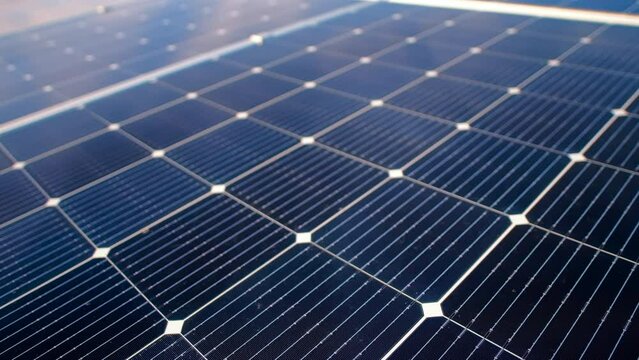
The Modi–Takaichi summit deepened one of the Indo-Pacific’s densest economic security partnerships. Among its many strands, one has drawn less attention than its payoff warrants: securing the Chinese-supplied equipment already wired into both power grids. The installed base of solar inverters, remotely manageable and overwhelmingly Chinese-made, is the most immediate exposure and the most tractable place to start. A joint de-risking workflow would lower costs, pool complementary strengths, and let both governments frame the exercise as routine technical risk management rather than a hostile signal to Beijing.
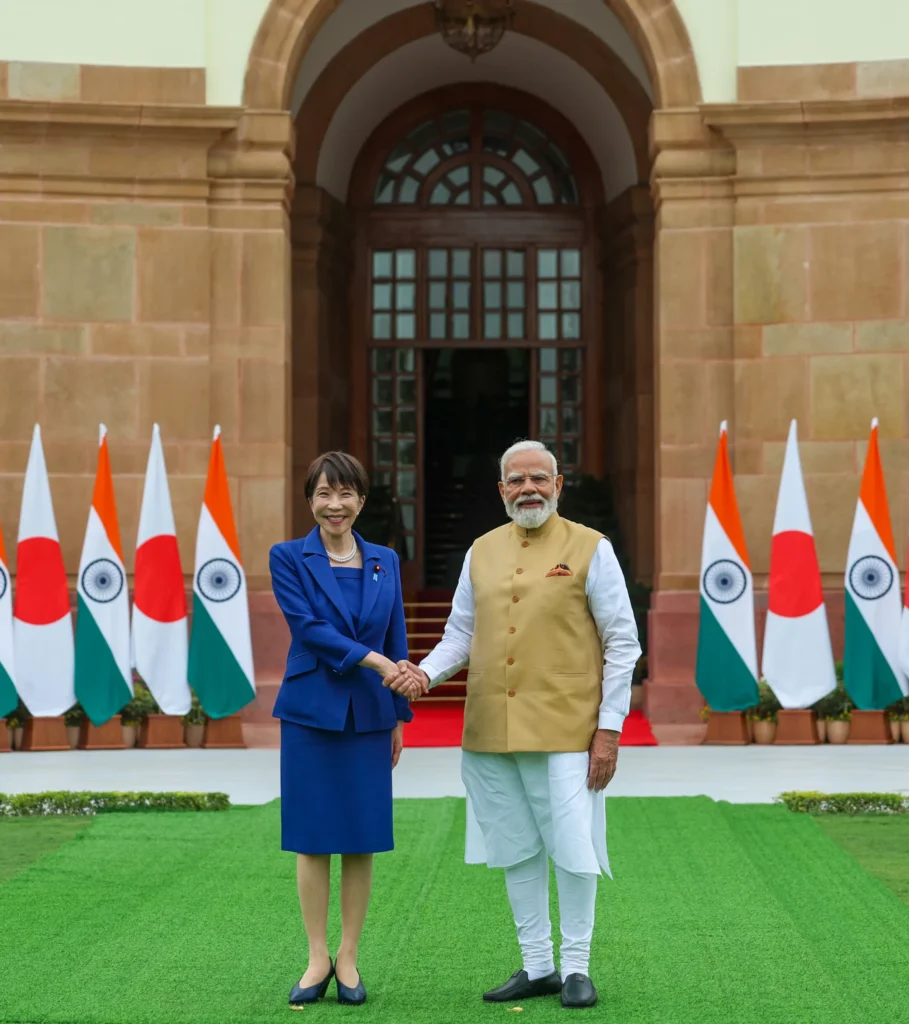
The just concluded 16th India–Japan Annual Summit in New Delhi delivered what this critical Indo-Pacific partnership now reliably produces: scale and forward momentum. Prime Ministers Modi and Takaichi oversaw key outcomes on economic security, energy resilience and advanced tech cooperation, alongside roughly 120 business-led cooperation initiatives valued at close to 2 trillion yen. The centrepiece was a joint declaration on economic security covering resilient supply chains in semiconductors, critical minerals, IT, clean energy, and pharmaceuticals, with a separate statement on AI cooperation, all building on the 10 trillion yen private-investment target set at last year’s summit.
As both governments turn to executing the various agreements, one area deserves greater attention: securing the core infrastructure and technology ecosystems already in place. Both countries have made clean technology central to their energy and economic security agendas, and solar central to clean technology. Both countries are among the top five globally in installed solar capacity. The dependence wired into that equipment has drawn far less attention than the supply chains that will produce the next generation of it.
The risk that the People’s Republic of China (PRC) could weaponise this dependence is documented, not hypothetical. Against the backdrop of the Galwan clash between China and India in 2020, Chinese state-linked actors were reported to have placed malware in India’s power grid, allegedly causing a blackout in Mumbai. In the solar-inverter segment specifically, the Washington Post reported that Chinese-made inverters wired into power grids could be exploited to trigger blackouts. Undocumented communication devices have reportedly been found in some Chinese-made inverters, a particular concern in a world where the two largest global suppliers, and five of the top ten, are Chinese.
Why Now
Energy security has become even more indispensable, in the wake of the Iran war. The last four months saw India absorbing soaring fiscal deficit and rationing commercial gas, and Japan battling accelerating core inflation. Both countries’ solar fleets will only grow in importance as secure, stable, and sustainable energy moves to the centre of policy.
This comes at a time when–as PM Takaichi remarked prior to departing for New Delhi– the international environment is increasingly marked by great uncertainty. China continues to present a structural, long term threat to both nations, as Washington talks of a G2 and its approach towards the Indo-Pacific remains, at best, unpredictable. This places a greater premium on trusted relationships and self-reliance initiatives.
Against this backdrop marked by a persistent Chinese threat and uncertainty about America’s role, Japan’s leadership is pushing for reforms to its post-war Constitution and has relaxed restrictions on defence exports. The 2026 defence budget set a record at 9 trillion yen, with roughly a tenth directed to long-range missiles; and the 2025 Defense White Paper describes China as “an unprecedented and the greatest strategic challenge.” In response to PM Takaichi’s November 2025 remarks about Taiwan, China imposed targeted dual-use export controls on Japanese entities, with rare-earth and critical-mineral exposure becoming a concern for Tokyo.
New Delhi, for its part, has weathered quite a few storms in its relationship with the US over the past eighteen months, from getting slapped with the highest tariff rates, to the Trump administration’s courting of Pakistan’s de facto military ruler Asim Munir, the killing of Indian seafarers in a US military strike in the Gulf of Oman, and doubts over the administration’s commitment to the Indo-Pacific. For India, the post-2024 limited thaw with China remains thin: as Beijing insists that the two sides keep the border issues on the side, it continues to rename stretches of Arunachal Pradesh it claims as its own and restrict exports of the rare-earth magnets Indian industry depends on.
New Delhi and Tokyo have clear grounds to deepen their partnership in securing the critical infrastructure.
The Gap: A Remotely Manageable Installed Base
In a market China dominates, the equipment already installed across both India and Japan poses a more immediate risk than the upstream cooperation now under way between them. The risk has not gone unnoticed by either country. In 2025, Japan was reported to have probed Chinese solar panels over security concerns. In India, analysts have warned that such inverters could be exploited for unauthorised remote disruption. The key vulnerability is that grid-connected inverters are remotely manageable. Chinese manufacturers supply roughly 85 percent of India’s utility-scale inverters and more than 80 percent of its rooftop ones; in Japan, the Chinese share is close to half.
The precedent is instructive. Volt Typhoon, a PRC state-sponsored group, maintained access to American power and water systems for at least five years. Its purpose, according to the FBI, was not espionage but pre-positioning to cause real-world harm in the event of a conflict. A fleet of remotely manageable inverters offers precisely that kind of pre-positioned access, at grid scale.
Why De-risking Lags
De-risking the installed base of solar technology infrastructure lags because it is expensive, and because acting alone is penalised. The estimated cost of replacing communications equipment in the US that posed national-security risks ran close to five billion US dollars. For a large and federalised country like India, the difficulty and costs are only multiplied. European-made alternatives are 20 to 40 percent more expensive. If both countries work towards de-risking in silos, the costs will be duplicated.
The India–Japan Asymmetry
The two countries’ profiles are close to mirror images, which is what makes joint action sensible rather than merely convenient. India carries the heavier dependence but deploys at unmatched speed, adding roughly 37 GW of solar capacity in 2025 against Japan’s 5.8 GW. Japan is less exposed and, unlike India, retains domestic manufacturing alternatives, with firms such as TMEIC among the leading non-Chinese suppliers. Neither profile substitutes for the other: India brings deployment scale and a decade of field experience, Japan brings industrial depth and mature vendors. The asymmetry is the argument for cooperation, not an obstacle to it.
What Bilateral Cooperation Would Do
If India and Japan work together rather than alone, the same de-risking that would read in Beijing as a hostile signal might still be viewed with suspicion, but it can credibly be presented as routine technical risk management.
India and Japan can start by jointly synthesising an inventory of installed solar equipment; the data would be valuable because both have built out large fleets: India, well over 150 GW, and Japan, around 100 GW. This would have to be conducted transparently and within the bounds of each country’s data laws and any other regulations relating to sensitive national data. Subsequently, joint data classification would allow for shared expertise. Equipment classified by risk to national security and energy sovereignty would help Japan and India decide which equipment needs retrofitting, and what can be left as is. Joint classification still allows each country to decide how to tackle each category sovereignly.
Owing to the nature of the risk, an audit is the next natural step. Japan and India should jointly tear down and examine both hardware and software to look for specific vulnerabilities, including undocumented devices and foreign cloud dependencies. Once these vulnerabilities are found, isolating them draws on complementary strengths: Japan’s R&D expertise in solar would be complemented by the experience India has gained from its massive solar push over the past decade. Under its PM Surya Ghar rooftop scheme, MNRE has moved to require inverters to connect to national servers and software managed by a designated agency, using M2M SIM-based communication. Japan instead hardens the device, requiring connected solar equipment to carry a government security certification (JC-STAR) in its grid rules from 2027, so a joint standard could combine the two into a single safeguard.
Jointly certifying equipment and financing de-risking would occur towards the end of the process. JBIC already runs a green credit line of up to 120 billion yen to India’s Power Finance Corporation, so this exercise could be financed using a similar arrangement. The final step is retrofitting, phased according to the risk classification.
Table 1. A joint India–Japan workflow for de-risking the installed solar base

Six stages from inventory to retrofit; India’s national-server rule and Japan’s JC-STAR certification converge into a single standard at the hardening stage. Source: author’s synthesis, drawing on MNRE (PM Surya Ghar), Japan’s IPA (JC-STAR) and JBIC.
The Right Time to Act
Both governments have moved to counter upstream risks. Securing what has already been built is the logical next step, and solar is the test case rather than the whole problem: the same inventory, classify, audit, and harden workflow extends to telecom equipment, smart meters, and port and grid systems, remotely manageable infrastructure already embedded in both economies.
The India–Japan economic security partnership is institutionally dense, focused on semiconductors, critical minerals, and supply chains. That future-facing agenda is prudent, but it must address the short- and medium-term risks in systems, networks, and infrastructure that already exist. Extended backward to the installed base, the partnership becomes cheaper to run together than apart, more efficient, and more geopolitically manageable. Few candidates for the partnership’s next phase offer as much security return for as little diplomatic cost.
Adwaith Sankar is a Research Assistant at Closed Door Policy Consulting. He is a final-year undergraduate on the NUS-Waseda double-degree programme, reading Political Science Honours at the National University of Singapore and International Liberal Studies at Waseda University. His research focuses on the politics of trade, energy, and economic statecraft across East and Southeast Asia and the Middle East. His honours thesis examines the deepening of UAE-Japan relations from energy interdependence to comprehensive partnership.
The views expressed above belong to the author(s) and do not necessarily represent the views of the Japan Institute for Crisis Management.