
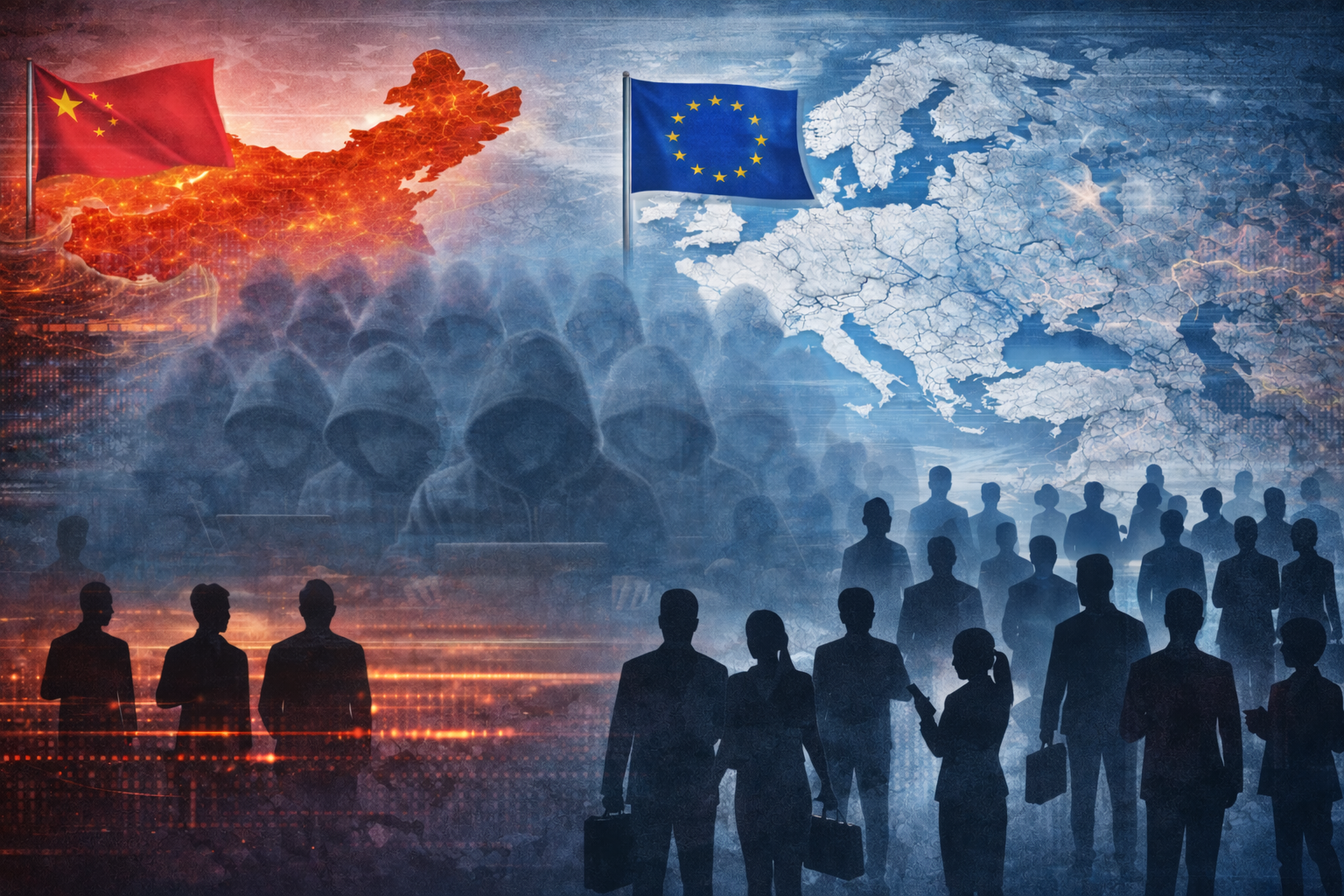
欧州における中国の情報活動
―チェコのスパイ事件が示す中国の人的情報収集と影響工作の構造―
China’s Intelligence Operations in Europe
— Czech Spy Case: Exposing China’s HUMINT and Influence Operations —
Issue No. 004
2026年3月13日
発行元:一般財団法人 日本危機管理研究所
*英訳版は日本語版の後に掲載しています。/ The English translation follows the Japanese text below.
エグゼクティブサマリー
• 2026年3月12日、Respekt (チェコの週刊政治経済誌)は、プラハで中国の情報機関と関係を持つとみられる人物による情報収集活動について報じた。
• 報道によれば、この人物は研究者やジャーナリストの立場を装い、政治関係者や専門家に接触していたとされる。
• 収集の対象には、チェコの外交政策、中欧地域の政治動向、台湾問題など中国の国益に関わる政策情報が含まれていた可能性が指摘されている。
• 本件は、通常の国際交流と区別がつきにくい形で行われる**人的情報収集(HUMINT)**の典型的事例とみられる。
• 近年の中国の対外情報活動は、人的情報収集に加え、政治的影響工作(Influence Operation)やサイバー情報収集と組み合わされる傾向が強まっている。
• 欧州では、中国の政治的影響活動に対する警戒が高まっており、チェコの事例はその具体的、象徴的な事例の一つと位置付けられる。
• 本レポートは、チェコの事例を手掛かりとして、中国の対外情報活動の構造と現代の「平時の情報戦」の特徴を整理する。
• また、民主主義国家における制度的課題を検討し、日本にとっての政策的示唆を提示する。
キーワード:
中国情報活動
国家安全部(MSS)
影響工作
HUMINT
統一戦線工作部
情報戦
欧州安全保障
チェコ事件分析
2026年3月12日、チェコの報道機関 Respekt は、プラハにおいて中国の情報機関と関係を持つとみられる人物が情報収集活動を行っていた疑いについて報じた。本件は、欧州における中国の情報活動の実態を示す事例として、安全保障研究者の注目を集めている。
報道によれば、この人物は研究者あるいはジャーナリストに近い立場を装い、チェコの政治家、政策関係者、研究者などと接触していたとされる。接触の目的は、チェコの外交政策や中欧地域の政治動向、さらに台湾問題など中国の国益に関わる政策情報の収集であったとみられている。
本件の特徴は、情報収集の方法が通常の国際交流と区別がつきにくい点にある。インタビュー、政策対話、研究会、学術交流、非公式の会食などを通じて接触が行われていたとされる。このような活動は情報機関の用語では「HUMINT(Human Intelligence)」と呼ばれる人的情報収集であり、政策判断や意思決定の背景を把握するための基本的な諜報手法である。
しかし近年の中国の対外活動では、情報収集と同時に政治的影響工作が行われる点が特徴とされる。影響工作とは、政治家、研究者、シンクタンク、メディア関係者など政策形成や世論形成に関与する人物との関係を構築し、長期的に政策環境や世論の方向性を変化させることを目的とする活動である。
欧州では近年、中国の政治的影響活動への警戒が強まっている。チェコ、バルト三国、北欧諸国などでは、中国の政治的影響力拡大が安全保障問題として認識される傾向が強い。チェコの情報機関も、中国の国家安全部(MSS)や統一戦線工作部による政治・学術分野への影響活動について警告を発してきた。
一方で、この事件は民主主義国家が直面する制度的課題も示している。チェコでは外国勢力のための活動を処罰する法律の定義が曖昧であるとの議論があり、合法的な国際交流と外国勢力による影響工作の境界が問題となっている。
この問題は欧州だけでなく日本にも関係する。
日本では外国エージェント登録制度や包括的なスパイ防止法が存在せず、外国政府による影響活動への制度的対応は限定的である。
さらに現代の情報活動は人的情報収集だけではなく、サイバー侵入、データ収集、AIによる分析などと組み合わされている。人的ネットワークから得られた情報とデジタルデータを統合することで、国家はより高度な情報優位を獲得しようとしている。
欧州を経由した技術取得構造(補足分析)
中国の技術取得は、対象国を直接狙うだけでなく、**第三国の研究機関・企業・サイバーインフラを経由する「迂回型情報取得」**の形をとる場合がある。
日本企業や大学が参加する欧州の研究ネットワークが侵害された場合、欧州を経由して日本の技術情報が取得される可能性も否定できない。
特に欧州は
国際共同研究
多国籍企業の研究拠点
EU研究プログラム
などを通じて世界の研究ネットワークのハブとなっており、欧州の情報セキュリティ侵害は第三国の技術流出にも波及する構造を持つ。
このように、プラハで報じられた事件は、現代の国家間競争における「平時の情報戦」の一側面を示すものといえる。
結論
チェコで報じられた中国スパイ事件は、現代の情報戦が人的情報収集、政治的影響工作、サイバー情報活動を組み合わせた複合的な形で展開されていることを示す事例である。国家間競争は軍事衝突だけでなく、情報、影響力、データをめぐる静かな競争として進行している。民主主義国家にとって重要なのは、開放的な社会制度を維持しつつ、このような情報活動に対する制度的対応をどのように整備するかという点である。
政策提言
第一に、外国勢力による影響活動の透明性確保である。
欧米諸国では外国エージェント登録制度などを通じて外国政府の政治的影響活動を透明化する制度が存在する。日本でも同様の制度的議論を進める必要がある。
第二に、学術・研究分野における安全保障意識の向上である。
大学や研究機関は情報収集活動の接触点となりやすい。研究交流の開放性を維持しながら、情報安全保障に関する制度と意識を強化する必要がある。(補足B参照)
第三に、サイバーと情報戦への包括的対応である。
人的情報、サイバー情報、世論操作は相互に連動している。政府機関だけでなく、研究機関、企業、メディアを含めた包括的な情報安全保障体制の構築が求められる。
第四に、海外における日本人研究者・企業人への情報安全保障対策の強化である。
日本企業の欧州拠点や大学・研究機関には多くの日本人研究者や技術者が所属しており、国際共同研究や政策交流の重要な拠点となっている。一方で、こうした環境は外国情報機関による接触や情報収集活動の対象となる可能性が高まっている。
そのため、日本政府は在外公館を通じた情報提供や注意喚起を強化するとともに、日本企業や研究者が海外で情報収集活動の対象となる場合を含め、情報保全制度やスパイ行為への法的対応の在り方についても検討を進める必要がある。
補論A 中国情報機関の構造とは?(Ministry of State Security: MSS)
中国の対外情報活動の中心的機関は国家安全部(Ministry of State Security: MSS)である。国家安全部は1983年に設立され、中国の対外情報収集、対諜報活動、政治安全維持などを担当する主要な情報機関である。
MSSは米国のCIAと比較されることが多いが、国内治安維持機能も担う点で旧ソ連のKGBに近い性格を持つと指摘されている。
中国の情報活動はMSSだけでなく複数の組織が関与する。統一戦線工作部は海外の政治家、研究者、華僑社会などとの関係構築を通じて政治的影響力を拡大する役割を担う。また、中国人民解放軍の戦略支援部隊はサイバー戦、電子戦、宇宙情報活動を担当している。
このように中国の情報活動は、人的情報収集、政治影響工作、サイバー情報活動を統合した複合的なシステムとして展開されている。
補論B 欧州における「日本企業・研究ネットワーク」への波及リスク事例(注意喚起)
2023年(オランダ)
半導体装置メーカー ASML で、中国出身の元従業員による技術流出事件が発覚。先端半導体装置関連の技術データが中国側に持ち出されたと報じられた。同社は日本の半導体装置企業や材料メーカーと密接なサプライチェーン関係を持っており、欧州企業を経由した技術流出が日本企業の技術ネットワークにも影響し得る構造が指摘された。
2021年(ドイツ)
ドイツ連邦憲法擁護庁(BfV)は、中国の情報機関が欧州企業・研究機関・技術展示会などを通じて技術取得活動を行っていると報告した。ドイツには多数の日本企業の研究拠点や欧州本社が存在しており、欧州拠点の日本企業が情報収集の対象となる可能性が指摘されている。
2018〜2020年(EU研究ネットワーク)
欧州委員会および安全保障機関は、中国が欧州大学や研究プロジェクトを通じて先端技術取得を試みていると警告した。EUの研究プログラムには日本企業や日本の研究者も参加するケースが多く、国際共同研究ネットワークを経由した技術情報取得のリスクが議論されている。
2024年(欧州議会関連事件)
欧州では、中国情報機関と関係を持つとされる人物が欧州議会関係者と接触し、政策情報の収集や影響工作を行っていた疑いが報じられた。欧州議会やNATO周辺は外交・安全保障情報が集中する環境であり、欧州が国際的な情報収集活動の拠点となり得る構造を示す事例とされている。
補論B分析
欧州は多国籍企業の研究拠点や国際共同研究の中心地であり、日本企業や研究機関も多数の拠点を置いている。このため、欧州の企業や研究機関が外国情報機関による情報収集活動の対象となった場合、欧州を経由して日本企業や日本人研究者の技術情報が取得される可能性も否定できない。
補論C 日本の大学・研究機関をめぐるサイバー攻撃・技術流出事例
2026年3月10日
東京大学は、研究室サーバーに対する不正アクセスを公表。共同研究者が利用していた学外サーバーが先に侵害され、そのアカウントを経由して東大研究室のサーバーに侵入され、学内外のサーバーへの不正アクセスの踏み台として利用された可能性が確認された。警察および関係機関と連携して調査が進められている。
2023年10月24日
東京大学は、教員のPCがサイバー攻撃を受け、学生や卒業生など約4300件の個人情報が流出した可能性があると発表。標的型メールなどを通じたマルウェア感染が原因とみられている。
2023年6月15日(逮捕)
産業技術総合研究所(AIST)の研究者が、フッ素化合物関連の研究データを中国企業に提供した疑いで警視庁に逮捕。不正競争防止法違反の疑いで捜査され、日本の先端技術が海外企業に流出した可能性が指摘された。
2025年頃まで継続的に指摘
日本の大学・研究機関では、中国政府の研究者勧誘プログラムや共同研究を通じて、先端技術が海外に移転するリスクが安全保障上の課題として議論されている。半導体、AI、量子技術など軍事転用可能な分野が特に懸念されている。
参考文献
Ondřej Kundra, František Trojan, “Čínský špion v Praze: na koho sbíral informace a proč se možná dostane na svobodu,” Respekt, 12 March 2026.
Czech Security Information Service (BIS), Annual Report.
Mattis, Peter & Brazil, Matthew. Chinese Communist Espionage: An Intelligence Primer. Naval Institute Press.
Brady, Anne-Marie. “Magic Weapons: China’s Political Influence Activities under Xi Jinping.”
Kania, Elsa B., Costello, John. “The Strategic Support Force and the PLA’s Information Warfare.”
U.S.-China Economic and Security Review Commission, Annual Report to Congress.
・舩山 美保 理事・主任研究員
国際政治経済学・心理学を基盤にサイバーセキュリティインテリジェンスを専門とする。ISO/IEC JTC1 SC28副国際幹事を歴任し、国際規格の策定プロセスを主導した経験を持つ。現在はAIリスク・情報戦・危機管理政策を横断的に研究している。
China’s Intelligence Operations in Europe
The Czech Spy Case: Exposing China’s HUMINT and Influence Operations
— The Compound Structure of Human Intelligence Collection and Influence Operations, and Implications for Japan —
Issue No. 004 Published: March 13, 2026
Publisher: Japan Institute of Crisis Management (一般財団法人 日本危機管理研究所)
Author: Miho Funayama
Executive Summary
- On March 12, 2026, Czech weekly political and economic magazine Respekt reported on suspected intelligence collection activities in Prague by an individual believed to have connections to Chinese intelligence agencies.
- According to the reporting, this individual approached politicians, policy officials, and experts while posing as a researcher or journalist.
- The targets of collection reportedly included Czech foreign policy, political trends in Central Europe, and policy information related to Chinese national interests such as the Taiwan issue.
- This incident is considered a typical case of HUMINT (Human Intelligence) collection — conducted in a form difficult to distinguish from ordinary international exchange.
- China’s recent external intelligence activities are characterized by an increasing tendency to combine intelligence collection with political influence operations and cyber intelligence collection.
- Vigilance against Chinese political influence activities is rising across Europe, and the Czech case is positioned as one concrete and symbolic example of this trend.
- Using the Czech case as a starting point, this report organizes the structure of China’s external intelligence activities and the characteristics of modern “peacetime information warfare.”
- It also examines the institutional challenges facing democratic nations and presents policy implications for Japan.
Keywords
China Intelligence Activities / Ministry of State Security (MSS) / Influence Operations / HUMINT / United Front Work Department / Information Warfare / European Security
Analysis of the Czech Incident
On March 12, 2026, Czech media outlet Respekt reported on suspicions that an individual believed to have connections to Chinese intelligence agencies had been conducting intelligence collection activities in Prague. This incident has attracted the attention of security researchers as a case demonstrating the reality of Chinese intelligence activities in Europe.
According to the reporting, this individual approached Czech politicians, policy officials, and researchers while posing in a capacity close to that of a researcher or journalist. The purpose of the approach is believed to have been the collection of policy information related to Czech foreign policy, political trends in Central Europe, and issues related to Chinese national interests such as the Taiwan question.
The defining characteristic of this incident is that the method of intelligence collection is difficult to distinguish from ordinary international exchange. Contact was reportedly made through interviews, policy dialogues, study groups, academic exchanges, and informal dinners. Such activities are referred to in intelligence agency terminology as “HUMINT (Human Intelligence)” — human intelligence collection — and constitute a fundamental intelligence technique for understanding the background of policy judgments and decision-making.
In recent years, however, a defining characteristic of China’s external activities is that intelligence collection is combined simultaneously with political influence operations. Influence operations refer to activities aimed at building relationships with individuals involved in policy formation and public opinion — such as politicians, researchers, think tanks, and media figures — in order to gradually alter the direction of the policy environment and public opinion over the long term.
Vigilance against Chinese political influence activities has been increasing across Europe in recent years. In the Czech Republic, the Baltic states, the Nordic countries, and elsewhere, the expansion of Chinese political influence has tended to be recognized as a security issue. Czech intelligence agencies have also issued warnings about influence activities by China’s Ministry of State Security (MSS) and the United Front Work Department in the political and academic spheres.
At the same time, this incident also illustrates the institutional challenges faced by democratic nations. In the Czech Republic, there has been debate that the definitions in laws punishing activities on behalf of foreign powers are ambiguous, with the boundary between legitimate international exchange and influence operations by foreign powers becoming a point of contention.
This problem is relevant not only to Europe but to Japan as well.
Japan lacks a foreign agent registration system or comprehensive counter-espionage law, and institutional responses to political influence activities by foreign governments are limited.
Furthermore, modern intelligence activities are not limited to human intelligence collection alone — they are combined with cyber intrusion, data collection, and AI-based analysis. By integrating information obtained from human networks with digital data, states are seeking to achieve an even higher level of intelligence superiority.
Supplementary Analysis: The Technology Acquisition Structure Routed Through Europe
China’s technology acquisition does not merely target countries directly — it can take the form of “indirect intelligence acquisition” routed through research institutions, companies, and cyber infrastructure in third countries.
If European research networks in which Japanese companies and universities participate are compromised, the possibility cannot be ruled out that Japanese technical information is acquired through European intermediaries.
Europe in particular — through international joint research, multinational corporate research bases, and EU research programs — has become a hub of global research networks, meaning that information security breaches in Europe have a structure that can cascade into technology leakage from third countries as well.
In this way, the incident reported in Prague can be said to illustrate one aspect of “peacetime information warfare” in modern interstate competition.
Conclusion
The Chinese spy case reported in the Czech Republic is an example demonstrating that modern information warfare is unfolding in a compound form combining human intelligence collection, political influence operations, and cyber intelligence activities. Interstate competition proceeds not only through military confrontation, but as a quiet competition over information, influence, and data. What is important for democratic nations is the question of how to develop institutional responses to such intelligence activities while maintaining an open social system.
Policy Recommendations
First: Ensuring Transparency in Influence Activities by Foreign Powers
In Western nations, systems exist — such as foreign agent registration requirements — to render transparent the political influence activities of foreign governments. Japan needs to advance similar institutional discussions.
Second: Raising Security Awareness in Academic and Research Fields
Universities and research institutions are prone to becoming contact points for intelligence collection activities. While maintaining the openness of research exchange, institutional frameworks and awareness regarding information security need to be strengthened. (See Supplementary Chapter B)
Third: Comprehensive Response to Cyber and Information Warfare
Human intelligence, cyber intelligence, and public opinion manipulation are interconnected. The construction of a comprehensive information security framework encompassing not only government agencies but also research institutions, companies, and media is required.
Fourth: Strengthening Information Security Measures for Japanese Researchers and Business People Overseas
Japanese companies’ European bases and universities and research institutions host many Japanese researchers and engineers, serving as important bases for international joint research and policy exchange. At the same time, such environments are increasingly likely to become targets of contact and intelligence collection activities by foreign intelligence agencies.
Accordingly, the Japanese government needs to strengthen information provision and alerts through overseas diplomatic missions, and also needs to advance consideration of the appropriate form of information security systems and legal responses to espionage — including cases in which Japanese companies and researchers become targets of intelligence collection activities overseas.
Supplementary Chapter A: What Is the Structure of China’s Intelligence Agencies? (Ministry of State Security: MSS)
The central institution of China’s external intelligence activities is the Ministry of State Security (MSS). Established in 1983, the MSS is China’s primary intelligence agency, responsible for external intelligence collection, counter-intelligence, and maintenance of political security.
The MSS is often compared to the U.S. CIA, but it has been pointed out that it more closely resembles the former Soviet KGB in that it also performs domestic security maintenance functions.
China’s intelligence activities involve multiple organizations, not the MSS alone. The United Front Work Department plays the role of expanding political influence through relationship-building with overseas politicians, researchers, and overseas Chinese communities. The Strategic Support Force of the People’s Liberation Army is responsible for cyber warfare, electronic warfare, and space intelligence activities.
In this way, China’s intelligence activities are deployed as a compound system integrating human intelligence collection, political influence operations, and cyber intelligence activities.
Supplementary Chapter B: Cases of Spillover Risk to “Japanese Corporate and Research Networks” in Europe (Advisory)
2023 (Netherlands)
A technology leakage incident by a former employee of Chinese origin at semiconductor equipment manufacturer ASML came to light. It was reported that technical data related to advanced semiconductor equipment had been taken to the Chinese side. The company has close supply chain relationships with Japanese semiconductor equipment companies and materials manufacturers, pointing to a structure in which technology leakage through European companies could also affect the technology networks of Japanese companies.
2021 (Germany)
Germany’s Federal Office for the Protection of the Constitution (BfV) reported that Chinese intelligence agencies were conducting technology acquisition activities through European companies, research institutions, technology exhibitions, and other channels. Germany hosts numerous Japanese companies’ research bases and European headquarters, and the possibility that Japanese companies with European bases could become targets of intelligence collection has been noted.
2018–2020 (EU Research Networks)
The European Commission and security agencies warned that China was attempting to acquire advanced technologies through European universities and research projects. Cases in which Japanese companies and Japanese researchers also participate in EU research programs are numerous, and the risk of technical information acquisition through international joint research networks is being discussed.
2024 (European Parliament-related Incident)
In Europe, it was reported that individuals believed to have connections to Chinese intelligence agencies made contact with European Parliament-related persons, with suspicions of policy information collection and influence operations. The environment around the European Parliament and NATO concentrates diplomatic and security information, and this incident is cited as an example demonstrating a structure in which Europe can become a base for international intelligence collection activities.
Analysis of Supplementary Chapter B
Europe is the center of research bases for multinational companies and international joint research, with numerous Japanese companies and research institutions maintaining bases there. Accordingly, if European companies and research institutions become targets of intelligence collection activities by foreign intelligence agencies, the possibility that technical information of Japanese companies and Japanese researchers is acquired through European intermediaries cannot be ruled out.
Supplementary Chapter C: Cases of Cyberattacks and Technology Leakage Involving Japanese Universities and Research Institutions
March 10, 2026
The University of Tokyo disclosed unauthorized access to a laboratory server. It was confirmed that an external server used by a joint researcher had been compromised first, and through that account, intrusion into the University of Tokyo laboratory’s server occurred, with the possibility that it was used as a stepping stone for unauthorized access to internal and external servers. Investigation is proceeding in coordination with police and relevant agencies.
October 24, 2023
The University of Tokyo announced that a faculty member’s PC had been subjected to a cyberattack, with the possibility that approximately 4,300 items of personal information including students and alumni had leaked. Malware infection through targeted emails is believed to be the cause.
June 15, 2023 (Arrest)
A researcher at the National Institute of Advanced Industrial Science and Technology (AIST) was arrested by the Metropolitan Police Department on suspicion of providing research data related to fluorine compounds to a Chinese company. Investigated on suspicion of violating the Unfair Competition Prevention Act, the possibility that Japan’s advanced technology leaked to an overseas company was noted.
Continuously Noted Through Approximately 2025
At Japanese universities and research institutions, risks of advanced technology transfer overseas through Chinese government researcher recruitment programs and joint research have been discussed as security challenges. Fields with potential military applications — particularly semiconductors, AI, and quantum technology — are of particular concern.
References
- Ondřej Kundra, František Trojan, “Čínský špion v Praze: na koho sbíral informace a proč se možná dostane na svobodu,” Respekt, 12 March 2026.
- Czech Security Information Service (BIS), Annual Report.
- Mattis, Peter & Brazil, Matthew. Chinese Communist Espionage: An Intelligence Primer. Naval Institute Press.
- Brady, Anne-Marie. “Magic Weapons: China’s Political Influence Activities under Xi Jinping.”
- Kania, Elsa B., Costello, John. “The Strategic Support Force and the PLA’s Information Warfare.”
- U.S.-China Economic and Security Review Commission, Annual Report to Congress.
- https://www.respekt.cz/cesko/cinsky-spion-v-praze-na-koho-sbiral-informace-a-proc-se-mozna-dostane-na-svobodu
Author: Miho Funayama, Director and Senior Researcher Specializing in cyber security intelligence, grounded in international political economy and psychology. Has served as Vice International Secretary of ISO/IEC JTC1 SC28, leading international standards development processes. Currently engaged in cross-disciplinary research spanning AI risk, information warfare, and crisis management policy.